Vegetarian Skillet Lasagne Recipe
Fusion cuisine · 520 calories
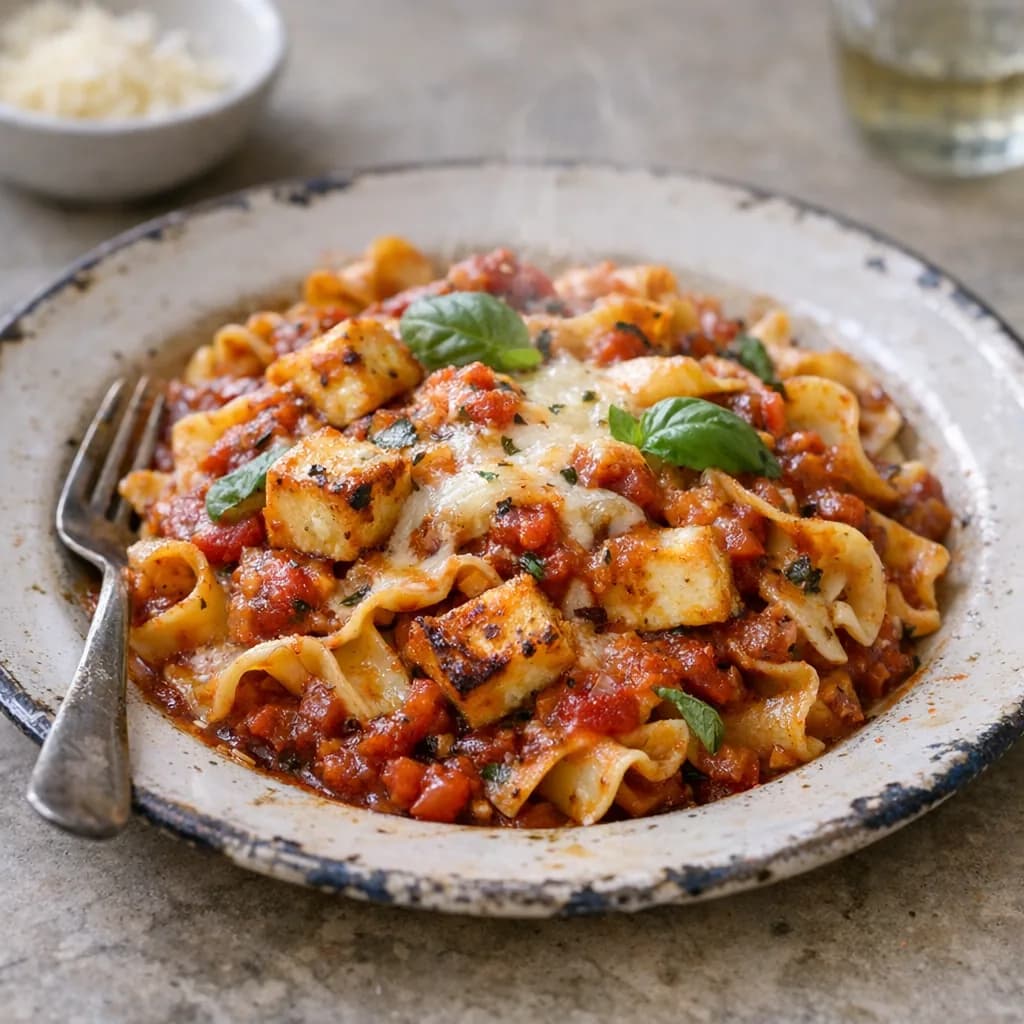
About this recipe
A quick and hearty vegetarian dinner featuring layers of lasagne sheets, cottage cheese, and a flavorful tomato sauce, all cooked in a single skillet.
Ingredients
- 1 Pack Planet Organic G's Baby Leaf Spinach
- - Knorr Stock Cubes Vegetable
- - Tata Salt
- - Schwartz Oregano
- - Longley Farm Cottage Cheese
- - De Cecco Sugo Alla Napoletana
- NaN Filippo Berio Classico Pure Olive Oil
- 400G Petti 100% Italian Chopped Tomatoes
- 350 g Cathedral City Mature Cheddar Cheese 350g
- 375 g Napolina Plain Lasagne Pasta Sheets 375g
Instructions
- 1. Heat a large, deep skillet over medium heat and add 1 tablespoon of olive oil.
- 2. Spoon half of the tomato pasta sauce (about 175 g) into the skillet and stir to combine with the olive oil.
- 3. Spoon 300 g of cottage cheese evenly over the sauce mixture in the skillet.
- 4. Break 250 g of dried lasagne sheets into pieces and layer them, uncooked, over the cottage cheese, ensuring they cover the surface evenly.
- 5. Spoon the remaining pasta sauce over the pasta and sprinkle with 1 teaspoon dried oregano, 100 g baby spinach, and a pinch of salt.
- 6. Add 400 g tinned chopped tomatoes, breaking them up with a spoon, and pour them over the top.
- 7. Dissolve 1 vegetable stock cube in 1 cup (240 ml) of hot water, pour it into the skillet, cover, and simmer on low heat for 20 minutes, stirring occasionally to prevent sticking.
- 8. Once the pasta is tender, sprinkle 100 g of grated cheddar cheese over the top, cover, and cook for an additional 5 minutes until the cheese is melted.
- 9. Serve hot.
How to make Vegetarian Skillet Lasagne
- Start the sauce base. Heat a large skillet over medium heat with 1 tablespoon of olive oil, then add half of the marinara sauce and stir to combine with the oil.
- Layer the skillet. Spoon the cottage cheese evenly over the sauce and cover it with the uncooked egg noodles. Top with the remaining marinara, oregano, spinach, salt and the broken-up canned tomatoes.
- Simmer the noodles. Add 1 cup of vegetable broth, cover and simmer on low heat for 20 minutes, stirring occasionally to prevent sticking, until the noodles are tender.
- Melt the cheese. Sprinkle the shredded cheddar cheese over the top, cover the skillet again and cook for an additional 5 minutes until the cheese is melted.
- Garnish and serve. Serve the skillet lasagne hot straight from the pan, garnished with fresh parsley if you like.
Frequently asked questions
- Why are uncooked egg noodles used in this Vegetarian Skillet Lasagne?
- Uncooked egg noodles are used to simplify the cooking process by allowing them to absorb the flavors of the marinara sauce, vegetable broth, and other ingredients as they cook directly in the skillet. This technique eliminates the need for pre-boiling and ensures the noodles are infused with rich, layered flavors.
- Can I substitute Longley Farm Cottage Cheese with another ingredient?
- Yes, you can substitute cottage cheese with ricotta cheese for a creamier texture or even mascarpone for a richer flavor. However, cottage cheese offers a lighter and slightly tangy profile that complements the marinara sauce and spinach well.
- How do I ensure the noodles cook evenly without sticking to the skillet?
- To prevent sticking, stir the dish occasionally during the 20-minute simmering phase. Adding the vegetable broth evenly and ensuring the skillet is covered will help the noodles cook uniformly and absorb moisture without drying out.
- What role does Cathedral City Mature Cheddar Cheese play in the recipe?
- The mature cheddar cheese adds a sharp, savory richness to the dish and creates a gooey, melted topping that ties all the flavors together. Its bold flavor profile complements the tangy marinara sauce and the creamy cottage cheese.
- What is the best way to reheat leftovers of this dish?
- Reheat leftovers in a skillet over low heat, adding a splash of vegetable broth to prevent dryness. Alternatively, microwave individual portions, covering them with a damp paper towel to retain moisture. Avoid reheating at high temperatures to prevent overcooking the noodles or drying out the cheese topping.