Vegetable Khichdi Recipe
Indian cuisine · 420 calories
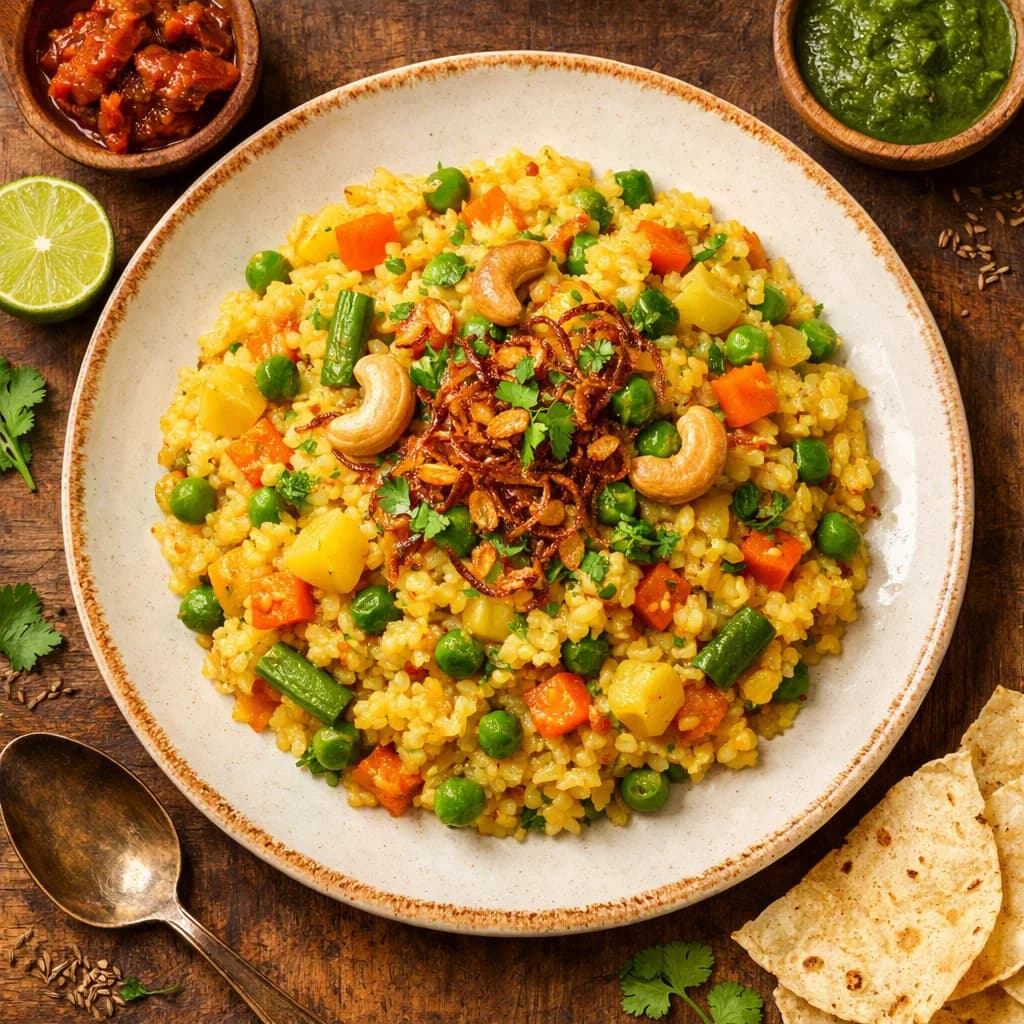
About this recipe
A light and nutritious one-pot meal with rice, lentils, and seasonal vegetables.
Ingredients
- 1 Kg Carrots - 1kg
- 1 Kg Laila Basmati Rice
- - Tata Salt
- - Jalpur Cumin Seeds
- 400 g Trs Turmeric Powder 400G
- 500G Ghee, 500G
- 1 Kg Red Lentils (Masoor Dal), 1Kg
- 1 Onion Red 1 Each
- 375G Birds Eye Garden Peas
Instructions
- 1. Rinse 100 g basmati rice and 100 g red lentils together until the water runs clear. Peel and chop 1 onion and 1 carrot.
- 2. Heat 1 tbsp ghee in a pressure cooker or deep pot over medium flame.
- 3. Add 1 tsp cumin seeds and 1/2 tsp turmeric, sauté for 30 seconds.
- 4. Add the chopped onion, carrot and 80 g peas and stir for 2 minutes.
- 5. Add the rinsed rice, lentils, 1/2 tsp salt, and 750 ml (3 cups) of water. Stir to combine.
- 6. Pressure cook for 2 whistles or simmer covered for 20 minutes until fully cooked.
How to make Vegetable Khichdi
- Rinse and temper. Rinse the rice and lentils together until the water runs clear. Heat ghee in a pressure cooker or deep pot over medium flame and sauté cumin seeds and turmeric for 30 seconds.
- Add the vegetables. Add the seasonal vegetables and stir for 2 minutes, then add the rinsed rice, lentils, salt and 3 cups of water and stir to combine.
- Cook the khichdi. Pressure cook for 2 whistles, or simmer covered for 20 minutes, until the rice and lentils are fully cooked.
Frequently asked questions
- What is the total time required to make Vegetable Khichdi?
- The total time required is 30 minutes, including 10 minutes of prep time and 20 minutes of cooking.
- Can Vegetable Khichdi be made ahead or stored?
- Yes, Vegetable Khichdi can be stored in an airtight container in the refrigerator for up to 2 days. Reheat with a splash of water to regain its consistency.
- What can I serve with Vegetable Khichdi?
- Vegetable Khichdi pairs well with yogurt, pickle, or papad for a complete Indian meal.
- Can I substitute red lentils in this recipe?
- Yes, you can substitute red lentils (Masoor Dal) with yellow lentils (Moong Dal) for a slightly different texture and flavor.