Vegan Black-Eyed Pea Fritters Recipe
African cuisine · 320 calories
About this recipe
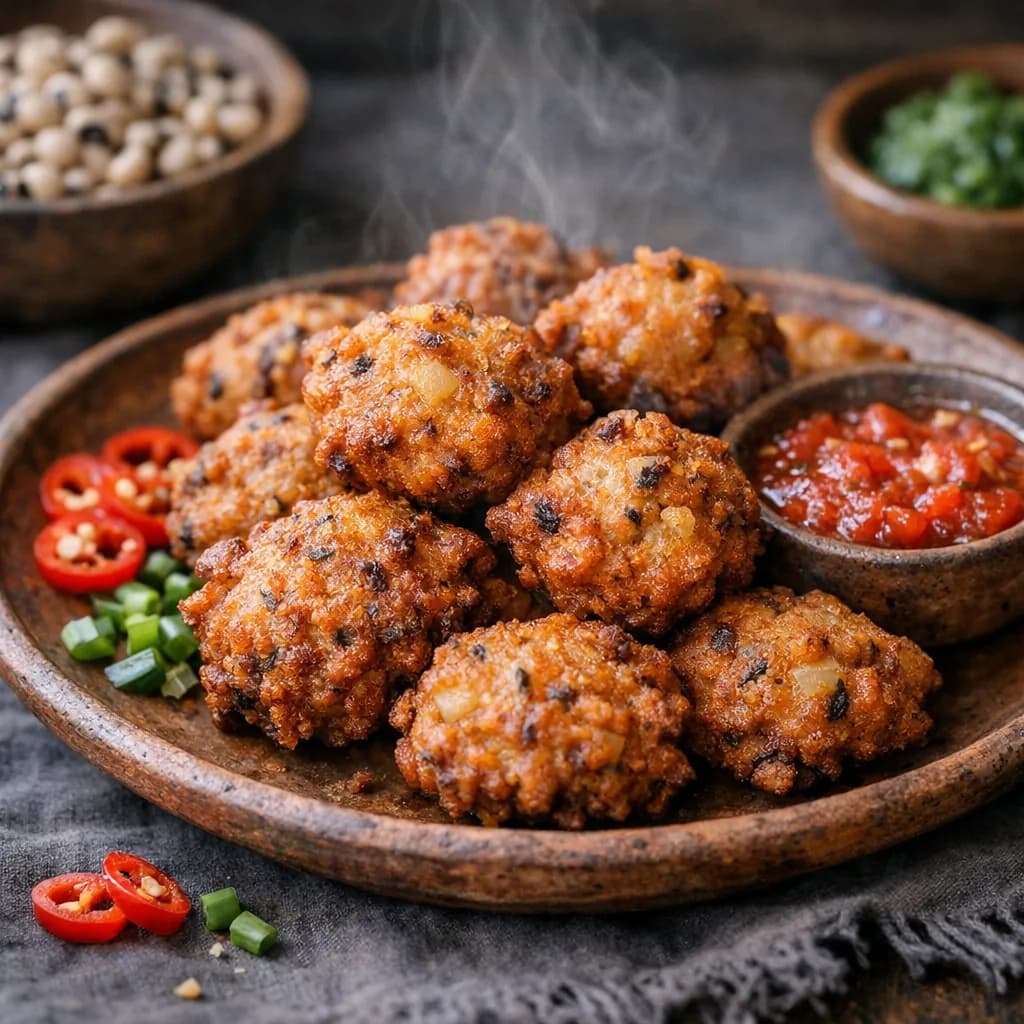
A delightful vegan dinner option inspired by Togolese cuisine, featuring crispy black-eyed pea fritters seasoned with chili and onion.
Ingredients
- - Chilli Powder Rajah
- 1 L Ktc Sunflower Oil
- 1 Kg Fresh Onion Pack. 1kg - Ofoodi African Store
- - East End Black Eye Beans
- - Tata Salt
Instructions
- 1. Soak 250 g of dried black-eyed peas in plenty of cold water for at least 6 hours or overnight. Drain, then blend with a splash of water into a thick, coarse paste.
- 2. In a mixing bowl, combine the black-eyed pea paste with 1 tsp chili powder, 1 finely minced onion, and 1 tsp salt.
- 3. Add a little more water if needed, stirring until it forms a thick, moldable mixture.
- 4. Shape the mixture into small rolls or balls, ensuring they are uniform in size for even cooking.
- 5. Heat 500 ml of sunflower oil in a deep pan over medium heat. Once hot, carefully fry the rolls in batches until golden brown, crispy and cooked through, about 4-5 minutes per batch.
- 6. Remove the fritters from the oil and place them on a paper towel-lined plate to drain excess oil.
- 7. Serve the fritters warm as a main dish or alongside a dipping sauce of your choice.
How to make Vegan Black-Eyed Pea Fritters
- Grind the peas. Grind 500 g of dry black-eyed peas into a fine flour in a food processor or grinder, then set it aside.
- Season the dough. In a mixing bowl, combine the flour with 1 tsp chili powder, 1 finely minced onion and 1 tsp salt.
- Form the dough. Gradually add water, stirring until it forms a thick, moldable dough, then shape it into small rolls or balls of uniform size for even cooking.
- Fry the fritters. Heat 500 ml vegetable oil in a deep pan over medium heat, then fry the rolls in batches 3-4 minutes per batch until golden brown and crispy.
- Drain and serve. Drain the fritters on a paper towel-lined plate, then serve warm as a main dish or with your choice of dipping sauce.
Frequently asked questions
- Why do you need to grind the black-eyed peas into flour for this recipe?
- Grinding black-eyed peas into flour ensures the fritters have a smooth and cohesive texture. Using whole or partially ground peas may result in uneven cooking and a crumbly consistency. A fine flour also helps the dough bind properly when mixed with water.
- Can I adjust the spice level of these Vegan Black-Eyed Pea Fritters?
- Yes, you can easily adjust the spice level by increasing or reducing the amount of chili powder. If you prefer a milder flavor, you can substitute chili powder with paprika or omit it entirely. For extra heat, consider adding finely chopped fresh chilies or cayenne pepper.
- What oil is best for frying the fritters, and can I use less oil to make them healthier?
- KTC Vegetable Oil is recommended for its high smoke point, making it ideal for deep frying. To use less oil, you can shallow fry the fritters in a skillet with just enough oil to cover half the fritter, flipping them midway through cooking. However, deep frying yields the crispiest texture.
- How can I ensure the fritters are cooked evenly and don’t fall apart while frying?
- To ensure even cooking, shape the fritters into uniform rolls or balls so they cook at the same rate. The dough should be thick and moldable; if it’s too watery, the fritters may fall apart. Fry in small batches to avoid overcrowding the pan, which can lower the oil temperature and lead to uneven cooking.
- Can these fritters be made ahead of time and reheated later?
- Yes, the fritters can be made ahead and stored in an airtight container in the fridge for up to 2 days. To reheat, place them in an oven at 180°C (350°F) for 5-7 minutes to regain their crispiness. Avoid microwaving, as it may make them soggy.
- Are there any substitutes for black-eyed pea flour if I can’t find black-eyed peas?
- If black-eyed peas are unavailable, you can use chickpea flour (also known as gram flour) as a substitute. While the flavor will differ slightly, chickpea flour provides a similar texture and binding quality. However, for authenticity, black-eyed peas are recommended.