Sweet And Spicy Korean Protein Noodles Recipe
Korean cuisine · 760 calories
About this recipe
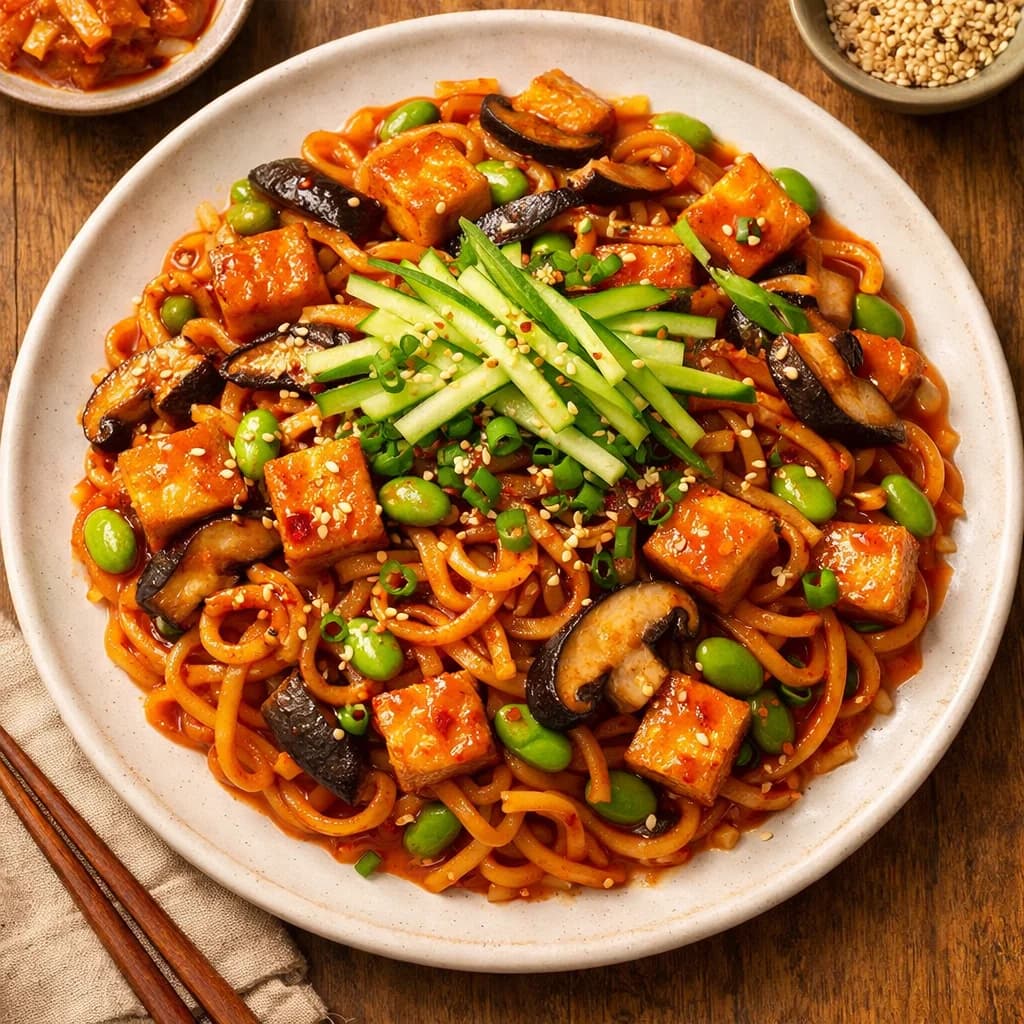
Sweet and Spicy Korean Protein Noodles bring together the vibrant flavors of Korea in a quick, satisfying dinner perfect for two. This dish features tender rice noodles tossed with fresh julienned vegetables like carrots, chow chow, and mooli radish, all coated in a bold gochujang-based sauce. A sprinkle of grated protein cheese and a touch of vanilla protein powder boost the nutrition profile, delivering 84g of protein per serving. With just 35 minutes from start to finish, this recipe is ideal for busy professionals looking to enjoy a delicious yet hearty meal. The combination of sweet, spicy, and umami flavors ensures every bite is packed with taste and texture. Pair it with a refreshing beverage for a cozy dinner that’s both indulgent and health-conscious.
Ingredients
- 100 G Jumbo Garlic 100g
- 500 G Cj Gochujang Hot Pepper Paste
- - Amoy Dark Soy Sauce
- - Maldon Flakes Sea Salt
- - Fresh Asian Mooli Radish Daikon Exotic Vegetable
- 180G Broad Bean Threads, Wide Glass Noodles, 180G
- 500 Ml Clearspring Organic Rapeseed Oil, 500Ml
- - Korean Red Pepper Powder - Gochugaru
- 500 Ml Pure Korean Sesame Oil, 500Ml
- 4 Pack Fresh Carrots - Pack Of 4
- 100G Rajah Black Pepper Ground 100G
- 1 Lemon - 1 Each
- 180G Eatlean Protein Cheese Grated
- 280G The Tofoo Co Naked Organic Extra Firm Tofu
- 3 Pack Fresh Chow Chow Vegetable I Fresh Chayote Squash I Pack Of 3
Instructions
- 1. Soak 180 g of glass noodles in warm water for 15 minutes, then drain and set aside.
- 2. Peel and julienne the carrots, the chow chow vegetable, and the mooli radish into thin strips.
- 3. Pat the 280 g of extra firm tofu dry and cut into 1.5 cm cubes. Heat 1 tbsp of rapeseed oil in a large pan and fry the tofu for 4-5 minutes until golden, then remove and set aside.
- 4. In the same pan, sauté 2 minced garlic cloves until fragrant, about 1 minute.
- 5. Add the julienned vegetables to the pan and stir-fry for 3-4 minutes until slightly softened.
- 6. Mix 50 g gochujang paste, 30 ml soy sauce, 15 ml sesame oil, 10 g red pepper powder, and the juice of half the lemon in a bowl to create the sauce.
- 7. Add the sauce to the pan with the vegetables and stir to coat evenly.
- 8. Incorporate the softened glass noodles and the fried tofu into the pan, tossing gently to combine with the vegetables and sauce.
- 9. Sprinkle in 5 g Maldon sea salt and 3 g black pepper for seasoning.
- 10. Add 60 g of grated Eatlean Protein Cheese to the noodles, stirring until melted and well mixed.
- 11. Cook everything together for another 3-4 minutes to meld the flavors.
- 12. Serve the sweet and spicy Korean protein noodles hot, garnished with a squeeze of the remaining fresh lemon juice.
How to make Sweet And Spicy Korean Protein Noodles
- Soak noodles and prep vegetables. Soak the rice noodles in warm water for 15 minutes, then drain. Peel and julienne the carrots, chow chow and mooli into thin strips.
- Stir-fry the vegetables. Heat olive oil and sauté the minced garlic for about 1 minute until fragrant, then add the julienned vegetables and stir-fry for 3-4 minutes until slightly softened.
- Add the sauce. Mix gochujang paste, soy sauce, sesame oil, red pepper powder and lemon juice into a sauce, then add it to the pan and stir to coat the vegetables evenly.
- Toss in the noodles. Add the softened rice noodles and toss gently to combine, season with sea salt and black pepper, then stir in the grated protein cheese and protein powder until well mixed.
- Cook through and serve. Cook everything together for another 3-4 minutes to bring the flavours together, then serve hot with a squeeze of fresh lemon juice.
Frequently asked questions
- What is the role of gochujang paste in this recipe?
- Gochujang paste is the backbone of the sauce, providing the signature sweet, spicy, and umami flavor that defines Korean cuisine. It balances the heat from the red pepper powder with a subtle sweetness, making it essential for achieving the authentic taste of the dish.
- How can I adjust the spice level in this recipe?
- To reduce the spice level, you can use less gochugaru (Korean red pepper powder) and dilute the gochujang paste with a bit more lemon juice or soy sauce. For extra heat, increase the amount of gochugaru or add fresh chopped chili peppers to the sautéed vegetables.
- Why is the mooli radish used in this recipe, and can it be substituted?
- Mooli radish adds a crisp texture and a mild, slightly peppery flavor that complements the sweet and spicy sauce. If unavailable, you can substitute it with other crunchy vegetables like jicama or even regular radishes, though the flavor profile will slightly differ.
- How can I prevent the rice noodles from sticking together while cooking?
- To prevent sticking, ensure the noodles are soaked properly in warm water and drained thoroughly before adding them to the pan. Tossing them gently with the sauce immediately after adding helps coat them evenly and keeps them separate.
- What is the best way to store leftovers of Sweet and Spicy Korean Protein Noodles?
- Store leftovers in an airtight container in the refrigerator for up to 2 days. Reheat gently in a pan with a splash of water or sesame oil to loosen the noodles and revive the sauce without drying out the dish.