Spiced Chayote And Vegetable Relish Recipe
Fusion cuisine · 600 calories
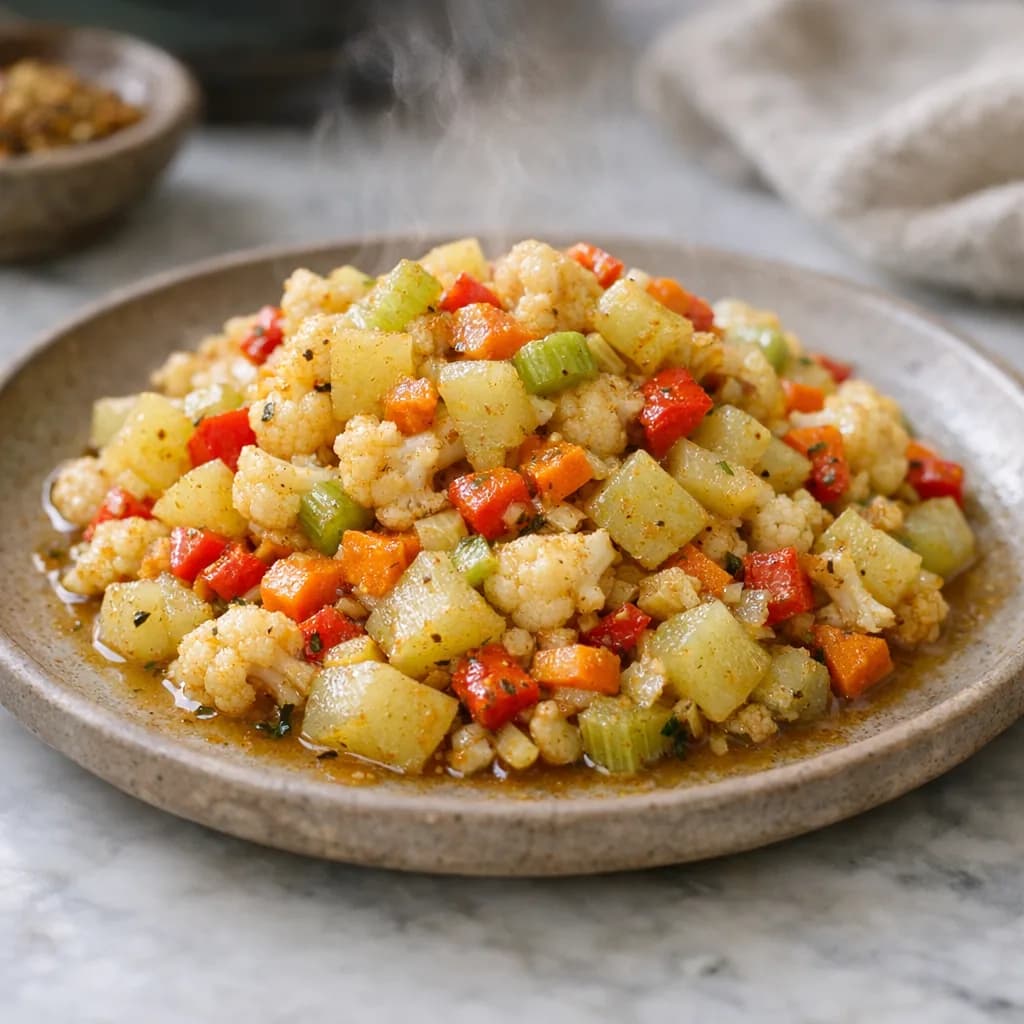
About this recipe
A vibrant and tangy vegan relish made with chayote, cauliflower, and a medley of vegetables, infused with warm spices and perfect for a flavorful dinner side.
Ingredients
- - Fresh Asian Chayote / Chow Chow
- 1 Pc Cauliflower 1 Pc 500g To 700g
- 1 Kg Carrots - 1kg
- 1 stick Organic Celery Stick
- 1 Piece Red Bell Pepper, 1pcs | Gopuff
- 1 Kg Fresh Onion Pack. 1kg - Ofoodi African Store
- 70G Mill & Mortar Citrus Salt Flakes, 70G
- 250 Ml Huilerie Beaujolaise 2 Year Aged Fruit Vinegar Cider, 250Ml
- - Silver Spoon Granulated Sugar
- 400 g Trs Turmeric Powder 400G
- 50G Top-Op Clove Powder 50g
Instructions
- 1. Peel the chayotes and cut them into small cubes.
- 2. Chop the cauliflower into small florets, dice the carrots, celery, red bell peppers, and onions into bite-sized pieces.
- 3. In a large kettle, combine the chayote, cauliflower, carrots, celery, red bell peppers, and onions. Sprinkle 1/2 cup of salt over the vegetables, mix well, and let them sit for 3 hours, stirring occasionally.
- 4. After 3 hours, drain any excess liquid from the vegetables. In a separate bowl, mix 5 cups of cider vinegar, 5 cups of sugar, 2 teaspoons of turmeric, and 1/2 teaspoon of ground clove until the sugar dissolves.
- 5. Pour the vinegar mixture over the vegetables in the kettle. Bring the mixture to a gentle boil over medium heat, then reduce the heat and simmer for 15 minutes, stirring occasionally.
- 6. Remove from heat and let the relish cool to room temperature. Transfer to sterilized jars and refrigerate. Serve as a tangy side dish or condiment for dinner.
Frequently asked questions
- Why is the chayote peeled before cooking?
- Chayote skin can be tough and slightly waxy, which might affect the texture of the relish. Peeling ensures the cubes cook evenly and absorb the tangy vinegar mixture properly, resulting in a tender and flavorful relish.
- What role does turmeric play in this recipe?
- Turmeric adds a vibrant golden hue to the relish and imparts a subtle earthy flavor that complements the tanginess of the vinegar. It also has anti-inflammatory properties, making it a healthy addition to the dish.
- Can I use a different type of vinegar instead of cider vinegar?
- Cider vinegar provides a mild, fruity tang that balances the sweetness of the sugar in this recipe. If unavailable, white wine vinegar or rice vinegar can be used, but avoid stronger options like balsamic as they could overpower the dish.
- How do I know when the relish is cooked properly during simmering?
- The relish is ready when the vegetables are tender but still retain a slight crunch, and the vinegar mixture has slightly thickened. Avoid overcooking, as this could make the vegetables mushy and compromise the texture.
- Can I make this recipe less sweet or adjust the sugar content?
- Yes, you can reduce the sugar slightly to suit your taste. However, keep in mind that sugar helps balance the acidity of the vinegar and acts as a preservative, so reducing it too much may affect the flavor and shelf life.
- How long can I store this relish, and what’s the best way to keep it fresh?
- When stored in sterilized jars and refrigerated, the relish can last for up to 2 weeks. Ensure the jars are properly sealed and always use a clean spoon to scoop out portions to prevent contamination.