Jain-Style Boiled Cauliflower With Parsley Butter Recipe
Indian cuisine · 210 calories
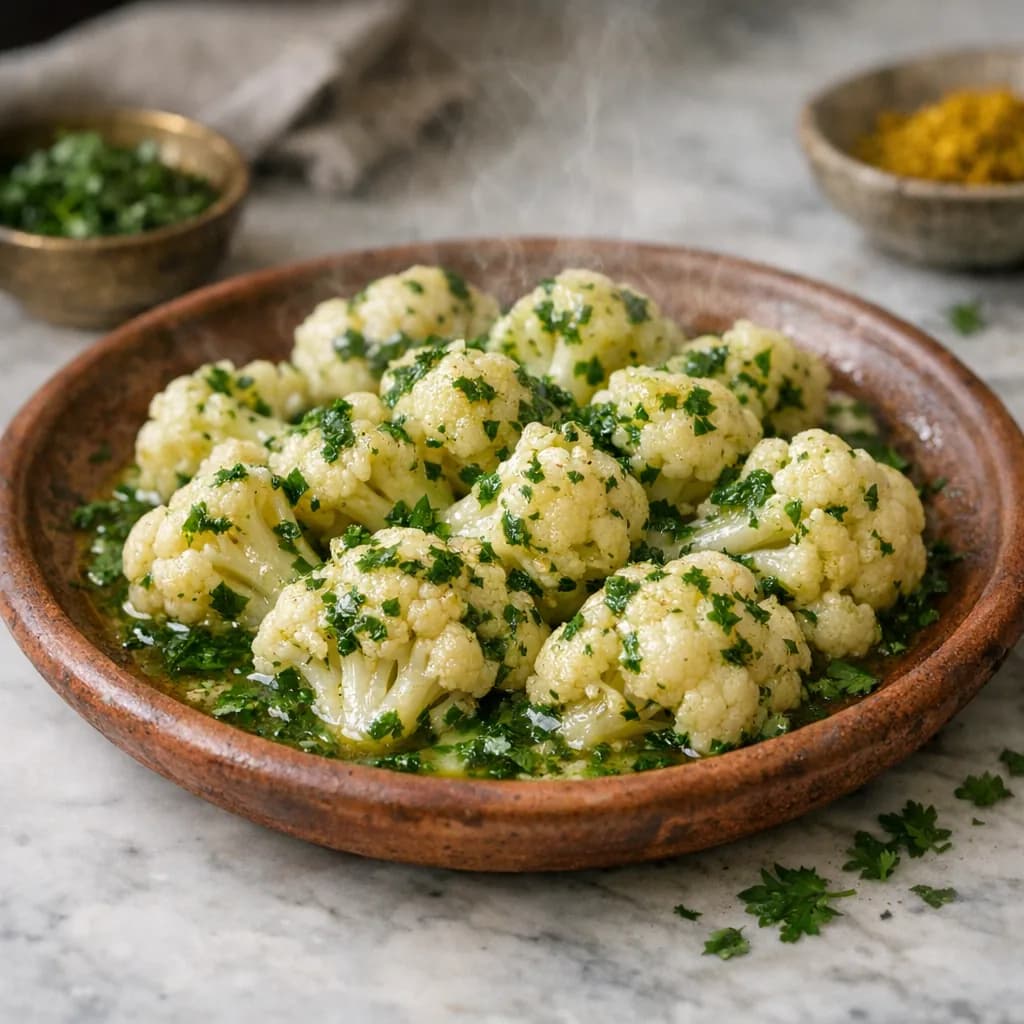
About this recipe
A simple and wholesome Jain-friendly boiled cauliflower dish, enhanced with melted butter and fresh parsley. Perfect for a light yet satisfying dinner.
Ingredients
- 200 g Anchor Salted Butter 200g
- 1 Pc Cauliflower 1 Pc 500g To 700g
- - Tata Salt
- 50G Picard Chopped Flat Parsley
Instructions
- 1. Remove the large outer leaves of the cauliflower and trim the stalk to about 1 inch. Cut a deep cross at the base of the stalk to ensure even cooking.
- 2. Bring a large pot of water to a boil and add 1/2 teaspoon of salt.
- 3. Place the cauliflower into the boiling water, head up, and boil for 3 minutes.
- 4. Carefully turn the cauliflower over so the head faces down, and boil for about 10 more minutes or until a knife slides in easily. Be cautious not to overcook.
- 5. In a small pan, melt 3 tablespoons of butter over low heat.
- 6. Once the cauliflower is cooked, drain well and transfer it to a serving platter. Drizzle the melted butter over the cauliflower and sprinkle with 2 tablespoons of chopped parsley.
- 7. Serve warm as a delightful main dish or side.
How to make Jain-Style Boiled Cauliflower With Parsley Butter
- Trim the cauliflower. Remove the large outer leaves, trim the stalk to about 1 inch and cut a deep cross at the base of the stalk so it cooks evenly.
- Blanch and refresh. Bring a pot of water to a boil with 1/2 teaspoon salt, boil the cauliflower head up for 3 minutes, then rinse it under cold water.
- Boil until tender. Return the cauliflower to the boiling water head down and boil for about 20 minutes until tender, taking care not to overcook it.
- Dress and serve. Melt 3 tablespoons butter over low heat, drizzle it over the cauliflower, sprinkle with 2 tablespoons chopped parsley and serve warm.
Frequently asked questions
- Why is the cauliflower boiled head-up first and then head-down later?
- Boiling the cauliflower head-up initially helps preserve its shape and ensures the florets cook evenly without becoming waterlogged. Flipping it head-down later allows the stalk, which is denser, to cook fully while the florets remain tender and intact.
- How can I tell if the cauliflower is cooked properly without overcooking it?
- The cauliflower is ready when a knife or skewer easily pierces the stalk without resistance, but the florets remain firm and intact. Overcooking can lead to mushy florets and a waterlogged texture, so monitor it closely during the boiling process.
- What is the best way to repurpose the leftover cooking water?
- The cooking water, infused with cauliflower flavor, can be used as a base for soups, stews, or even to cook rice for added depth. It’s a great way to reduce waste and make the most of the nutrients released during boiling.
- What should I do if I want to scale this recipe for a larger group?
- To serve more people, use multiple cauliflowers and increase the butter and parsley proportionately. Ensure you use a large enough pot to boil the cauliflower evenly, and cook them in batches if necessary to avoid overcrowding.