Halal Sweet And Tangy Relish Recipe
Fusion cuisine · 90 calories
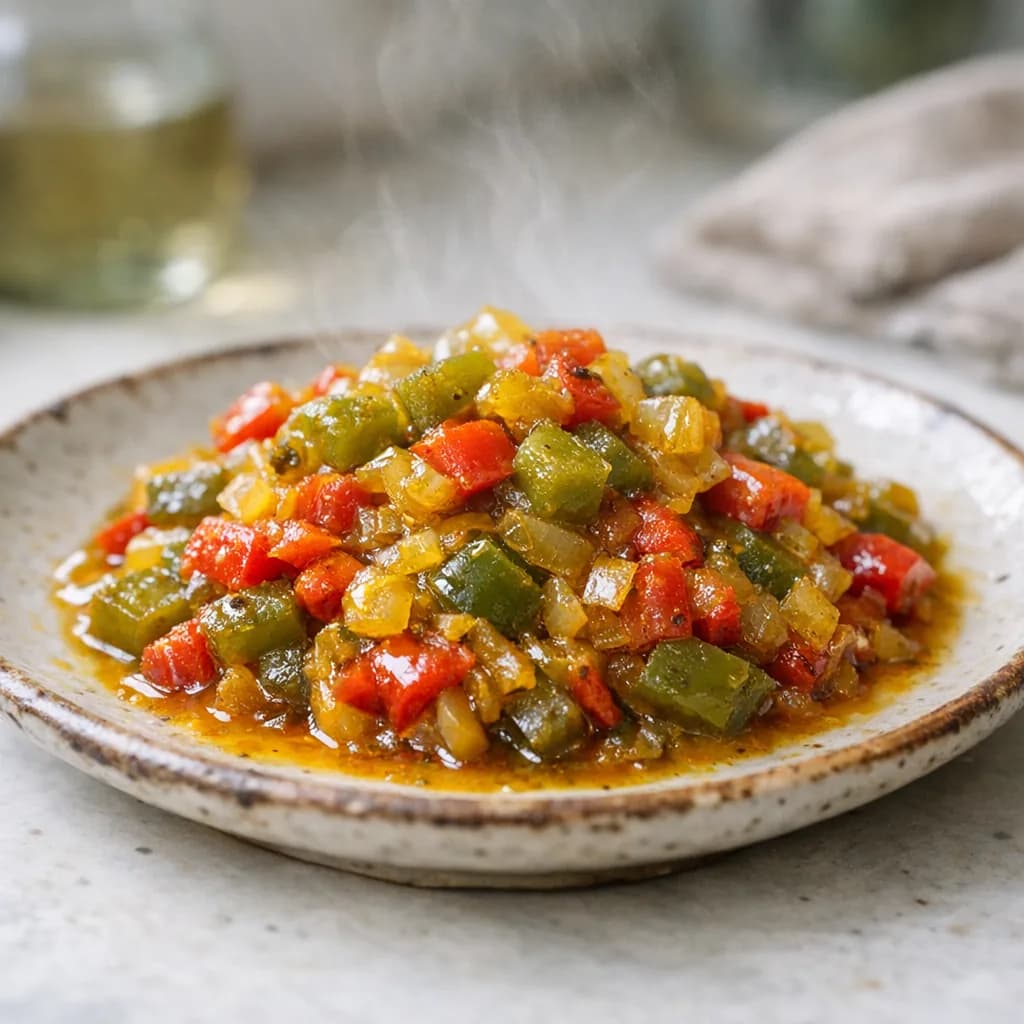
About this recipe
A flavorful sweet and tangy relish made with fresh vegetables and spices, perfect as a topping for dinner dishes or as a side condiment. This halal-friendly recipe is easy to prepare and adds a burst of flavor to your meals.
Ingredients
- 1 Kg Fresh Onion Pack. 1kg - Ofoodi African Store
- 1 Kg Tomatoes 1kg
- 1kg 1kg Green Pepper
- 1 Kg White Granulated Sugar
- Each Pepper Red- Each
- - Tata Salt
- 400 g Trs Turmeric Powder 400G
- 1 kg Cabbage 1 Kg
- - Bragg Apple Cider Vinegar
- 25 g Celery Seed 25G
Instructions
- 1. Coarsely grind 4 cups (about 400 g) of cabbage, 4 cups (about 600 g) of onion, 10 firm tomatoes (about 1 kg), 12 green peppers (about 1.8 kg), and 6 red peppers using a food processor or grinder.
- 2. Transfer the ground vegetables to a large bowl and sprinkle with 1/2 cup of salt. Mix well and let the mixture stand overnight (about 12 hours) to draw out excess moisture.
- 3. The next day, rinse the vegetable mixture thoroughly under cold water to remove excess salt, then drain well.
- 4. In a large pot, combine 6 cups (1.2 kg) of sugar, 1 tablespoon of celery seeds, 1 1/2 teaspoons of turmeric powder, and 4 cups (960 ml) of cider vinegar. Stir well and bring the mixture to a boil over medium heat.
- 5. Add the drained vegetable mixture to the pot and stir to combine. Heat the mixture until it just begins to boil, then reduce the heat and simmer for 3 minutes.
- 6. Carefully ladle the hot relish into sterilised jars, leaving about 1 cm of space at the top. Seal the jars tightly with sterilised lids.
- 7. Allow the jars to cool completely at room temperature, then store in the fridge and use within 4 weeks. Makes about 3 litres of relish (about 60 servings of 2 tablespoons).
How to make Halal Sweet And Tangy Relish
- Grind the vegetables. Coarsely grind 4 cups cabbage, 4 cups onion, 10 green tomatoes, 12 green peppers and 6 red peppers in a food processor or grinder.
- Salt overnight. Sprinkle the ground vegetables with 1/2 cup of salt in a large bowl, mix well and leave them to stand overnight to draw out moisture.
- Rinse and drain. The next day rinse the vegetable mixture thoroughly under cold water to remove the excess salt, then drain it well.
- Boil the syrup. Combine 6 cups sugar, 1 tablespoon celery seeds, 1 1/2 teaspoons turmeric and 4 cups cider vinegar in a large pot and bring to a boil.
- Cook and jar. Add the vegetables, simmer 3 minutes once boiling, then ladle into sterilised jars leaving 1/2 inch headspace, seal and cool before storing.
Frequently asked questions
- Why does the vegetable mixture need to stand overnight with salt?
- Letting the vegetable mixture stand overnight with salt helps draw out excess moisture from the vegetables. This step ensures the relish has a concentrated flavor and avoids becoming watery during cooking or storage.
- What is the role of turmeric powder in this relish?
- Turmeric powder adds a warm, earthy flavor and vibrant yellow color to the relish. It also has natural anti-inflammatory properties, making it a beneficial addition both for taste and health.
- Can I substitute cider vinegar with another type of vinegar?
- Cider vinegar is key for its mild acidity and slightly fruity flavor, which complements the sweetness of the honey and vegetables. If substituting, white wine vinegar or rice vinegar would work, but avoid harsher options like distilled white vinegar as it may overpower the dish.
- How do I know when the relish is ready to be jarred?
- The relish is ready when the vegetable mixture has softened slightly and the liquid has thickened after simmering. Avoid overcooking, as the vegetables should retain some texture for a satisfying bite.
- What are common mistakes to avoid when preparing this relish?
- One common mistake is not rinsing the salted vegetable mixture thoroughly, which can result in an overly salty relish. Additionally, ensure the jars are properly sterilized to prevent spoilage during storage.