Golden Gate Vegetable Chow Mein Recipe
Fusion cuisine · 340 calories
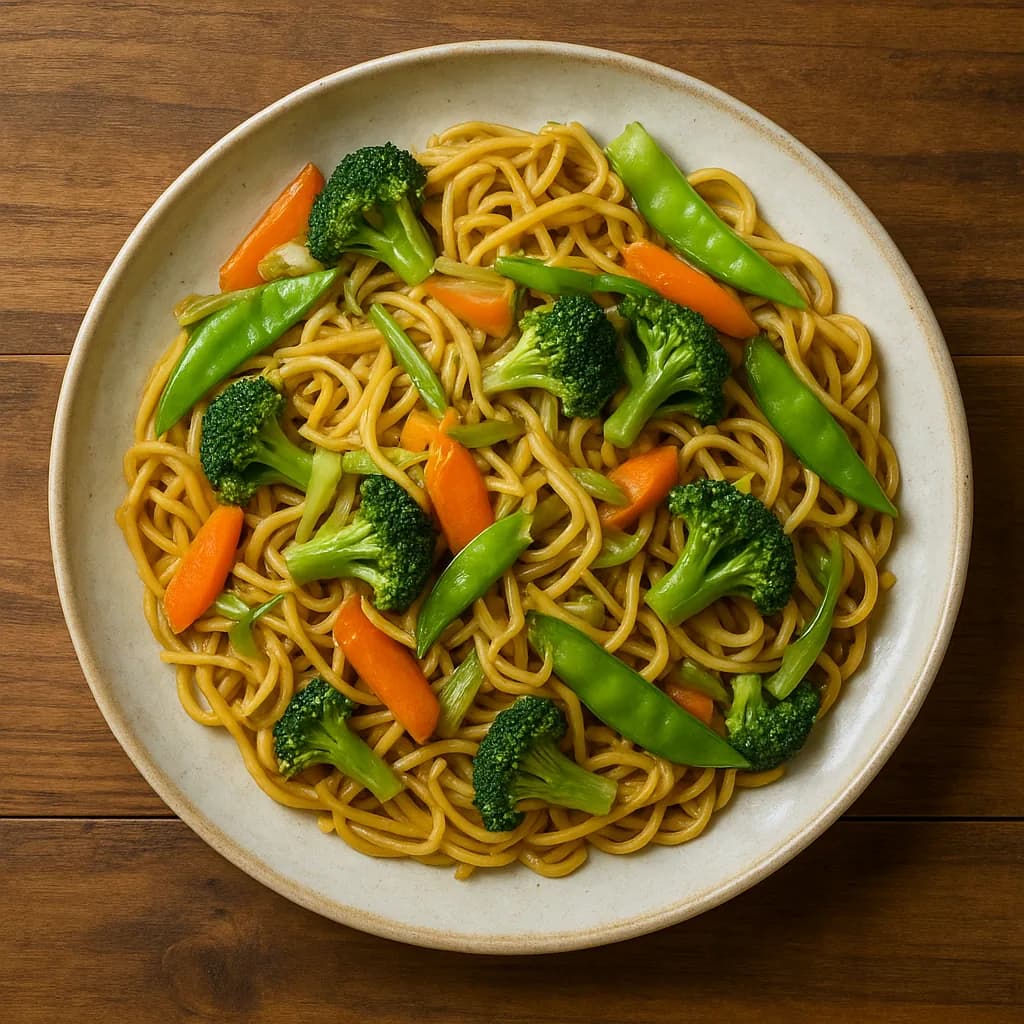
About this recipe
A delightful Asian-inspired vegetarian dinner featuring stir-fried vegetables and noodles in a savory sauce. Perfect for solution seekers looking for a quick and satisfying meal.
Ingredients
- 1 Unit Organic Cabbage White 1 Unit
- 1 Kg Carrots - 1kg
- - Knorr Stock Cubes Vegetable
- 1 stick Organic Celery Stick
- 50 g Vandevi Asafoetida 50g
- - Cooks & Co Sliced Mushrooms
- - Ktc Vegetable Oil
- 270G Akagi Dried Udon Noodles, 270G
- 420G Kingsford Corn Starch, 420G
- 250G Pak Choi 250G
- 250 Ml Kikkoman Less Salt Soy Sauce
Instructions
- 1. Cut 200 g mushrooms into thin slices and chop 2 celery stalks into small pieces.
- 2. Heat a pan over medium heat and add 2 tablespoons of vegetable oil. Add the celery and mushrooms, stirring occasionally, until softened, about 5 minutes.
- 3. Stir in 3 tablespoons soy sauce, 1/4 teaspoon hing and 1 vegetable stock cube dissolved in 300 ml hot water. Cover and simmer for 15 minutes.
- 4. In a small bowl, blend 1 tablespoon cornflour with 3 tablespoons of water until smooth. Gradually stir this mixture into the pan to thicken the sauce.
- 5. Add 250 g chopped pak choi, 150 g sliced carrots and 150 g shredded white cabbage and cook for another 5 minutes, stirring occasionally.
- 6. Cook 250 g udon noodles according to package instructions, then drain and set aside.
- 7. Serve the vegetable mixture over the cooked noodles, ensuring an even distribution of sauce and vegetables.
How to make Golden Gate Vegetable Chow Mein
- Soften the vegetables. Thinly slice the mushrooms and chop the celery. Heat 2 tablespoons of vegetable oil over medium heat and cook them, stirring occasionally, until softened, about 5 minutes.
- Simmer and thicken. Stir in soy sauce, hing and vegetable broth, cover and simmer for 15 minutes. Blend cornstarch with 3 tablespoons of water and stir it in gradually to thicken the sauce.
- Add the mixed vegetables. Add the mixed Chinese vegetables and cook for another 5 minutes, stirring occasionally, while you cook the noodles according to the packet instructions and drain them.
- Serve over noodles. Spoon the vegetable mixture over the cooked noodles, spreading the sauce and vegetables evenly, and serve straight away.
Frequently asked questions
- What is hing powder, and why is it used in this recipe?
- Hing powder, also known as asafoetida, is a pungent spice commonly used in Indian cooking to enhance flavors. In this recipe, it adds a subtle umami depth that complements the soy sauce and hot & sour broth, making the dish more aromatic and flavorful. If you can’t find hing powder, a small amount of garlic powder or onion powder can be used as a substitute, though it won't replicate the exact flavor.
- How do I know when the sauce is thickened properly?
- The sauce will thicken when the cornstarch mixture is fully incorporated and heated. You'll know it's ready when it coats the back of a spoon and has a glossy appearance. Be careful not to add too much cornstarch at once, as it can make the sauce overly thick and gummy.
- Why is the celery and mushroom mixture simmered for 15 minutes?
- Simmering the celery and mushrooms with the soy sauce, hing, and vegetable broth allows the flavors to meld together and the vegetables to absorb the seasoning. This step also softens the celery and mushrooms, ensuring a tender texture that complements the noodles.
- Can I prepare this dish in advance and reheat it later?
- Yes, you can prepare the vegetable mixture in advance and store it in an airtight container in the refrigerator for up to 2 days. Reheat it gently on the stovetop, adding a splash of water or broth if the sauce has thickened too much. Cook the noodles fresh before serving, as they may become mushy if stored with the sauce.
- What are some tips for evenly distributing the sauce over the noodles?
- To ensure even distribution of the sauce, toss the cooked noodles directly into the pan with the vegetable mixture before serving. Gently mix everything together using tongs or a large spoon, ensuring the noodles are well-coated. This method also helps the noodles absorb the flavors of the sauce.