Cabbage And Coconut Kootu Recipe
Fusion cuisine · 170 calories
About this recipe
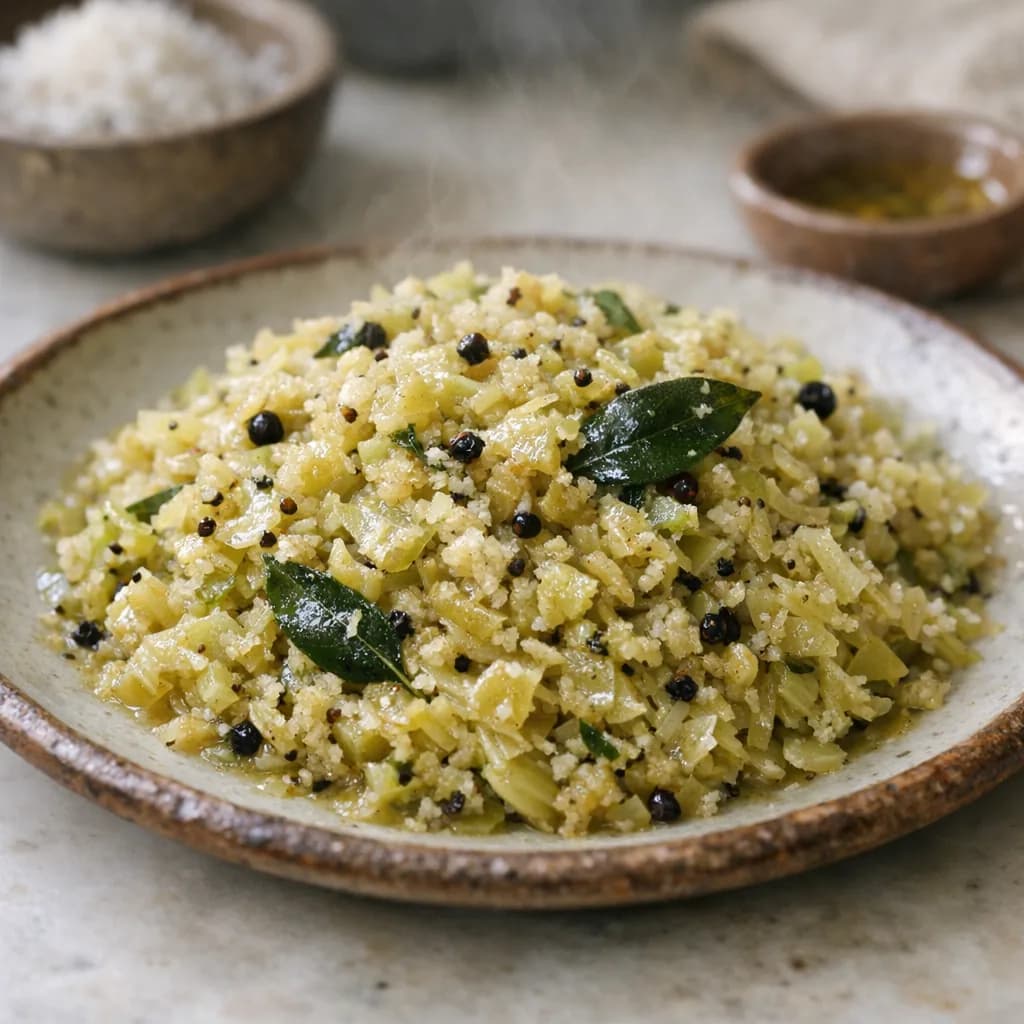
A flavorful Jain-friendly cabbage and coconut stew, spiced with cumin, black pepper, and curry leaves, perfect for a wholesome dinner.
Ingredients
- - Rajah Jeera Whole Cumin Seeds
- - Rajah Whole Red Chillies
- 50G Pepper Black Ground BWFO
- - Natco Ground Nutmeg
- 1 Kg Red Rickshaw Trs Urad Dal
- 10 G Natco Curry Leaves 10g
- 100 G Jalpur Desiccated Coconut 100g
- - Tata Salt
- - Old India Mustard Seeds
- - Ktc Vegetable Oil
- 1 kg Cabbage 1 Kg
- 450G Rose Rice Flour, 450G
Instructions
- 1. In a pot, cook 300 g chopped cabbage with 150 ml water until half-cooked, about 5 minutes.
- 2. Add 1/2 teaspoon salt to the pot and continue cooking until the cabbage is soft.
- 3. Dry roast 1 teaspoon urad dal, 2 dried red chilies, and 1/4 teaspoon black pepper in a small pan until aromatic.
- 4. Grind the roasted mixture with 1/2 teaspoon cumin seeds, 25 g (1/4 cup) desiccated coconut, and enough water to form a thick paste. Add 1/4 teaspoon nutmeg powder to the mixture and blend until smooth.
- 5. Add the paste to the cooked cabbage and bring to a boil, stirring occasionally. If the stew is too thin, add 1 teaspoon of rice flour mixed with a little water to thicken.
- 6. Add 8 curry leaves to the stew and remove it from heat.
- 7. In a small pan, heat 1 teaspoon vegetable oil. Add 1/4 teaspoon mustard seeds and let them pop. Then add 1 teaspoon urad dal and cook until lightly browned.
- 8. Pour the tempered oil mixture over the stew and mix well.
- 9. Serve the kootu hot as a wholesome dinner option.
How to make Cabbage And Coconut Kootu
- Cook the base. In a pot, cook the vegetables with enough water until half-cooked, then add 1/2 teaspoon salt and keep cooking until they become soft.
- Roast the spices. Dry roast 1 teaspoon urad dal, 2 dried red chillies and 1/4 teaspoon black pepper in a small pan until aromatic.
- Grind the coconut paste. Grind the roasted spices with 1/2 teaspoon cumin seeds, 1/4 cup grated coconut and enough water to make a thick paste, then blend in 1/4 teaspoon nutmeg powder until smooth.
- Simmer the kootu. Stir the paste into the cooked mixture and bring to the boil, stirring occasionally, adding a little rice flour if it is too thin. Add 5-10 curry leaves and remove from the heat.
- Temper and serve. Heat 1 teaspoon vegetable oil, let 1/4 teaspoon mustard seeds pop, then fry 1 teaspoon urad dal until lightly browned. Pour the tempering over the kootu, mix well and serve hot.
Frequently asked questions
- What role does nutmeg powder play in Cabbage and Coconut Kootu?
- Nutmeg powder adds a warm, aromatic undertone to the dish, complementing the rich coconut and spices. It balances the flavors and prevents the kootu from tasting overly bland or one-dimensional. Use it sparingly as it can overpower the dish if added in excess.
- How can I adjust the spice level in this recipe?
- To reduce spice, use fewer dried red chilies or substitute them with milder varieties. If you prefer more heat, increase the quantity of black pepper or dried chilies. Adjust the spice during the grinding step to ensure the flavors are well-incorporated.
- What’s the best way to thicken the kootu if it turns out too watery?
- If the kootu is too thin, mix a small amount of rice flour with water to create a slurry and stir it into the stew. This will thicken the dish without altering its flavor. Avoid adding too much rice flour as it can make the texture overly dense.
- What’s the purpose of tempering the mustard seeds and urad dal at the end?
- Tempering adds a burst of flavor and texture to the dish. The mustard seeds provide a nutty, aromatic crunch, while the browned urad dal adds a subtle crispiness. This step enhances the overall taste and is a signature finishing touch in many South Asian dishes.
- How can I tell when the cabbage is cooked perfectly for this recipe?
- The cabbage should be soft but not mushy, with a tender bite that complements the creamy texture of the coconut paste. Check for doneness by pressing a piece of cabbage with a spoon—it should yield easily without falling apart.