Baked Salmon Casserole Recipe
American cuisine · 650 calories
About this recipe
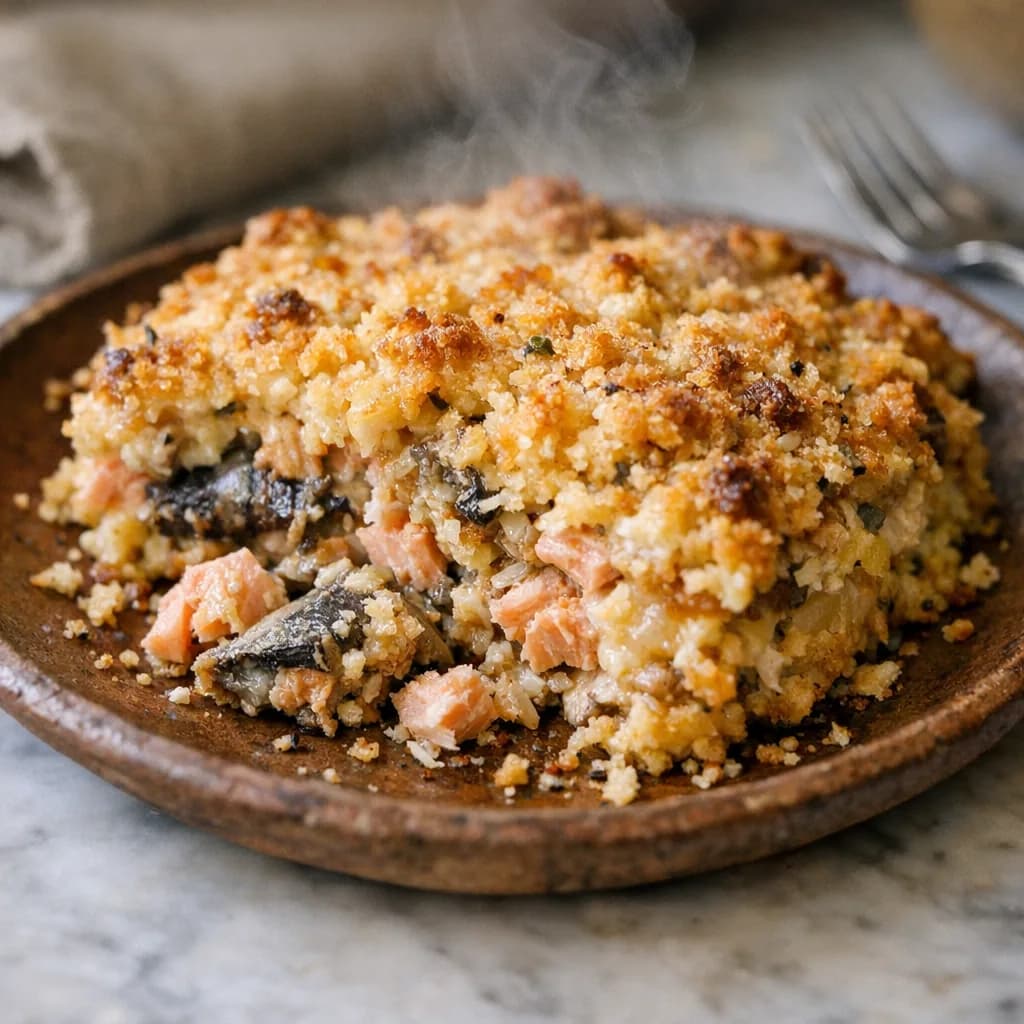
A hearty pescatarian dinner featuring tender salmon layered with a creamy white sauce and topped with golden cracker crumbs. Perfect for solution seekers looking for a satisfying meal.
Ingredients
- 500 Ml Longley Farm Buttermilk 500ml
- - Tropical Sun Evaporated Milk
- 1.5 Kg Matthews Cotswold Organic Plain Flour, 1.5Kg
- 460G Mowi 4 Scottish Salmon Fillets
- 200G All Things Butter Unsalted Butter
- 200G Carr'S Crackers Selection
- 390 g 6 Large Free Range Eggs Free Brand
Instructions
- 1. Preheat your oven to 190°C (375°F).
- 2. Put 500 g salmon fillets in a pan, cover with water and simmer gently for 8-10 minutes until cooked through. Drain, cool for 5 minutes, then remove the skin and any bones and flake the fish into bite-sized pieces.
- 3. In a saucepan, melt 55 g butter over medium heat. Stir in 60 g flour until smooth, then gradually add 240 ml evaporated milk while whisking continuously. Cook, stirring, until thickened.
- 4. Beat 1 egg in a small bowl. Whisk a few spoonfuls of the hot sauce into the egg, then whisk the egg mixture back into the pan. Cook gently for 1-2 minutes, stirring, until the sauce is creamy (do not boil).
- 5. In a greased baking dish, arrange alternate layers of flaked salmon and the white sauce.
- 6. Crush 100 g of crackers into crumbs and sprinkle them evenly over the top. Dot with 30 g butter and drizzle with 2 tablespoons of buttermilk.
- 7. Bake in the preheated oven for about 25 minutes, or until the top is golden and bubbling.
- 8. Remove from the oven and let cool slightly before serving.
- 9. Serves 4.
How to make Baked Salmon Casserole
- Prepare the salmon. Preheat the oven to 375°F (190°C). Pick out any bones from the salmon and flake it into bite-sized pieces.
- Make the white sauce. Melt 1/4 cup butter over medium heat, stir in 1/2 cup flour until smooth, then gradually whisk in 1 cup evaporated milk. Whisk in 1 beaten egg and cook, stirring often, until thick and creamy.
- Layer and top. Layer the flaked salmon and white sauce alternately in a greased baking dish. Sprinkle with 1 cup crushed crackers, dot with 2 tablespoons butter and drizzle with 2 tablespoons buttermilk.
- Bake and serve. Bake for about 25 minutes, until the top is golden and bubbling. Let it cool slightly before serving.
Frequently asked questions
- Why is evaporated milk used in the white sauce for this casserole?
- Evaporated milk adds a creamy richness to the white sauce without making it overly heavy. Its concentrated nature enhances the flavor and texture, creating a smooth base that pairs well with the flaked salmon. If unavailable, you can substitute it with an equal amount of whole milk, though the sauce may be slightly less rich.
- How can I tell when the casserole is fully baked and ready to serve?
- The casserole is ready when the top is golden brown and bubbling, which typically takes about 25 minutes at 375°F (190°C). To ensure it's fully heated through, you can insert a knife into the center; it should come out hot with no cold spots in the layers.
- What’s the purpose of buttermilk in the topping, and can it be replaced?
- The buttermilk adds a slight tanginess and helps to moisten the cracker topping, preventing it from becoming overly dry while baking. If you don’t have buttermilk, you can replace it with a mixture of milk and a teaspoon of lemon juice or white vinegar.
- What’s the best way to flake the salmon for this recipe?
- To flake the salmon, ensure it’s fully cooked and cooled slightly. Use a fork to gently separate the fish along its natural grain into bite-sized pieces. Be sure to remove any bones to avoid unpleasant surprises while eating.
- Can this casserole be prepared ahead of time and reheated?
- Yes, you can assemble the casserole up to the point of adding the cracker topping, then cover and refrigerate it for up to 24 hours. When ready to bake, add the cracker topping and bake as directed, adding an extra 5-10 minutes to the baking time if starting from cold. Reheating leftovers is best done in the oven to maintain the topping’s crispness.