Asian-Spiced Salmon With Garlic Bok Choy Recipe
Fusion cuisine · 430 calories
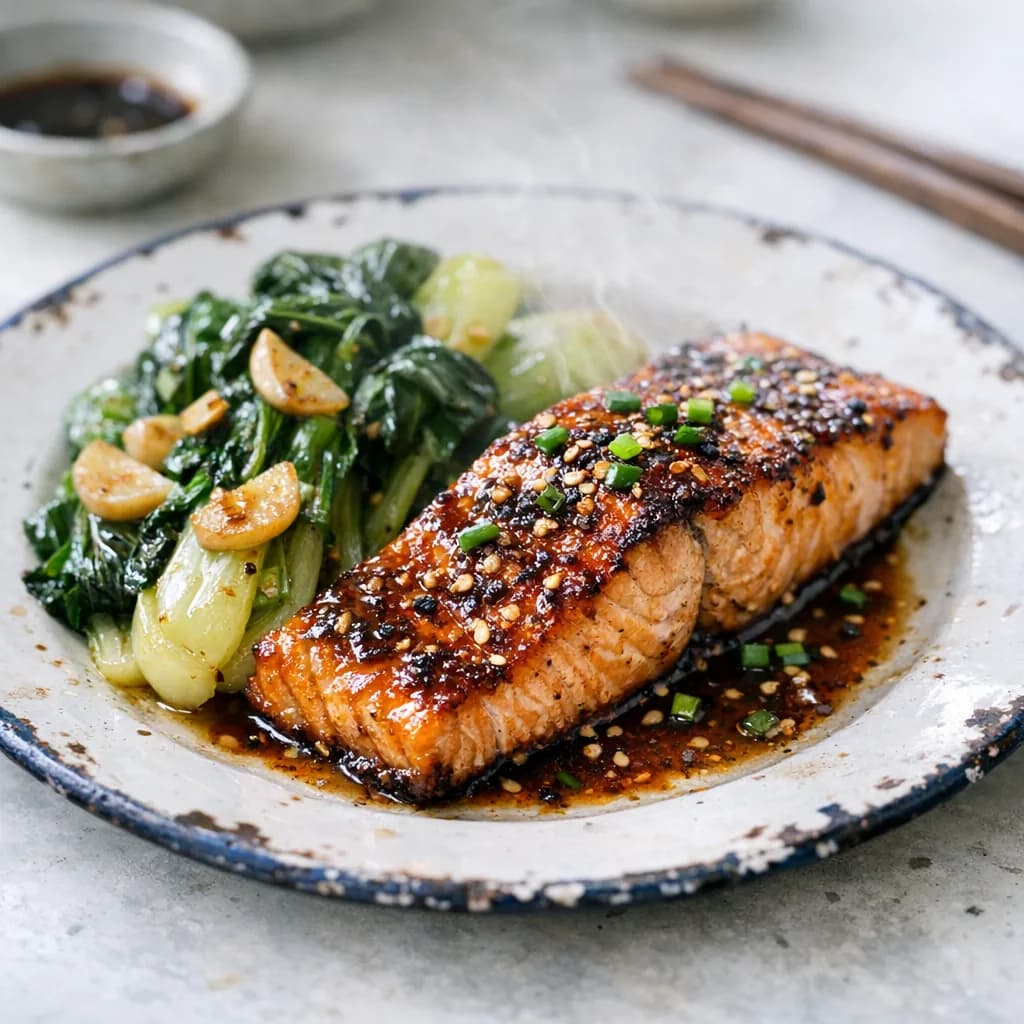
About this recipe
A flavorful pescatarian dinner featuring tender salmon fillets seasoned with five-spice powder, paired with braised bok choy in a savory garlic-infused broth.
Ingredients
- 500 Ml Groundnut Oil 500ml
- 100 G Jumbo Garlic 100g
- - Oxo Chicken Stock Cubes
- - Mowi Scottish Salmon Fillets
- - Tata Salt
- 100G Chinese Five Spice Pouch, 100G
- 250G Pak Choi 250G
Instructions
- 1. Heat 2 tablespoons of peanut oil in a heavy skillet large enough to hold both salmon fillets in one layer without crowding. Place the skillet over medium-high heat.
- 2. Rub the 2 salmon fillets with 2 teaspoons of five-spice powder, ensuring an even coating.
- 3. Place the salmon in the skillet, skin side down. Cover and cook for 4 minutes.
- 4. Flip the fillets over and cook for another 4 minutes until cooked through and flaking easily. Turn off the heat and let the salmon rest in the skillet to stay warm.
- 5. While the salmon cooks, peel and finely mince 4 garlic cloves. Halve 500 g pak choi lengthways.
- 6. Heat the remaining 2 tablespoons of peanut oil in a large deep skillet, Dutch oven, or wok over medium-low heat.
- 7. Add the minced garlic to the skillet and cook for 1 to 2 minutes, stirring occasionally to prevent burning.
- 8. Season the garlic with a pinch of salt, add the pak choi, and pour in 250 ml chicken stock (1 chicken stock cube dissolved in 250 ml boiling water).
- 9. Increase the heat to high, cover, and cook for 4 to 5 minutes, or until the thickest parts of the pak choi stems are just tender.
- 10. To serve, place a salmon fillet in the center of each plate and arrange the garlic pak choi on both sides.
- 11. Spoon some of the cooking broth from the pan over the pak choi for added flavor.
How to make Asian-Spiced Salmon With Garlic Bok Choy
- Season the salmon. Heat 2 tablespoons of peanut oil in a heavy skillet big enough to hold the salmon in one layer over medium-high heat. Rub the salmon fillets evenly with five-spice powder.
- Cook the salmon. Place the salmon skin side down, cover and cook for 3 minutes, then flip and cook for another 3 minutes until cooked through. Turn off the heat and let it rest in the skillet to stay warm.
- Cook the garlic. Meanwhile, peel and finely mince the garlic. Heat the remaining 2 tablespoons of peanut oil in a deep skillet or wok over medium-low heat and cook the garlic for 1 to 2 minutes, stirring so it doesn't burn.
- Braise in stock. Season the garlic with salt and stir in the chicken stock. Turn the heat to high, cover and cook for 4 to 5 minutes until the thickest parts are just tender.
- Plate and serve. Place a salmon fillet in the centre of each plate with the garlic mixture on both sides, and spoon some of the cooking broth over the vegetables.
Frequently asked questions
- Why is Chinese Five Spice used on the salmon, and can it be substituted?
- Chinese Five Spice adds a bold, aromatic flavor profile that complements the richness of salmon. It provides a balance of sweet, savory, and slightly spicy notes. If unavailable, you can substitute it with a mix of ground cinnamon, cloves, fennel seeds, star anise, and black pepper in equal proportions.
- How do I ensure the salmon fillets don’t stick to the skillet during cooking?
- To prevent sticking, ensure the skillet is properly heated before adding the peanut oil, and use enough oil to coat the surface. Additionally, avoid moving the salmon fillets immediately after placing them in the skillet; letting them cook undisturbed for 3 minutes helps develop a natural crust that prevents sticking.
- How can I tell when the bok choy is perfectly cooked?
- The bok choy is ready when the thickest parts of the stems are tender but still have a slight crunch. Overcooking can make the stems mushy and the leaves overly wilted, so keep an eye on them during the 4-5 minutes of high-heat cooking.
- Can this dish be made ahead or reheated, and how should it be stored?
- This dish is best served fresh to preserve the texture of the salmon and bok choy. If needed, store leftovers in an airtight container in the fridge for up to 2 days. Reheat gently in a skillet over low heat, adding a splash of water or stock to keep the bok choy moist.
- What type of peanut oil works best for this recipe, and can it be substituted?
- Virgin peanut oil is ideal because of its high smoke point and nutty flavor, which complements the Asian-inspired spices. If you need a substitute, use a neutral oil like grapeseed or canola oil, though you may lose some of the nutty undertones.