Importance of Nutrition: Types of Nutrients in Indian Foods
The Importance of Nutrition in Daily Life
Did you know that every meal you eat can impact your energy, growth, and overall health? Nutrition is not just about eating—it’s about understanding how food fuels your body and supports its daily functions. A balanced diet built around Indian food staples can provide the nourishment you need to stay active, resilient, and healthy.
What is Nutrition and Why Does It Matter?
Nutrition is the process of consuming and utilizing food to support your body’s needs. It’s not just about eating enough—it’s about eating the right combination of foods to access essential nutrients like carbohydrates, proteins, fats, vitamins, minerals, water, and fibre. These nutrients play a vital role in fueling your energy, supporting immunity, aiding digestion, and maintaining overall health.
Macronutrients and Micronutrients: The Building Blocks of Health
Macronutrients: Energy and Structure
Macronutrients are required in larger quantities and include carbohydrates, proteins, and fats. These nutrients provide energy and support essential bodily functions like growth and repair.
Micronutrients: Vital for Immunity and Cellular Health
Micronutrients, including vitamins and minerals, are needed in smaller quantities but are essential for immunity and overall wellbeing. A colourful plate with vegetables, fruits, dals, and dairy can naturally bring these nutrients into your diet.
Water and Fibre in Nutrition: The Unsung Heroes
Water: Stay Hydrated
Water supports hydration and digestion, making it an everyday essential. Pair meals with plain water, chaach, or coconut water, and include water-rich foods like cucumber, watermelon, and tomatoes.
Fibre: Digestive Health
Fibre aids digestion and is found in whole grains, pulses, vegetables, fruits, nuts, and seeds. Simple swaps like atta rotis, vegetable-rich pulao, or rajma with salad can increase fibre in your meals.
Balanced Diet Indian Food: What Does It Look Like?
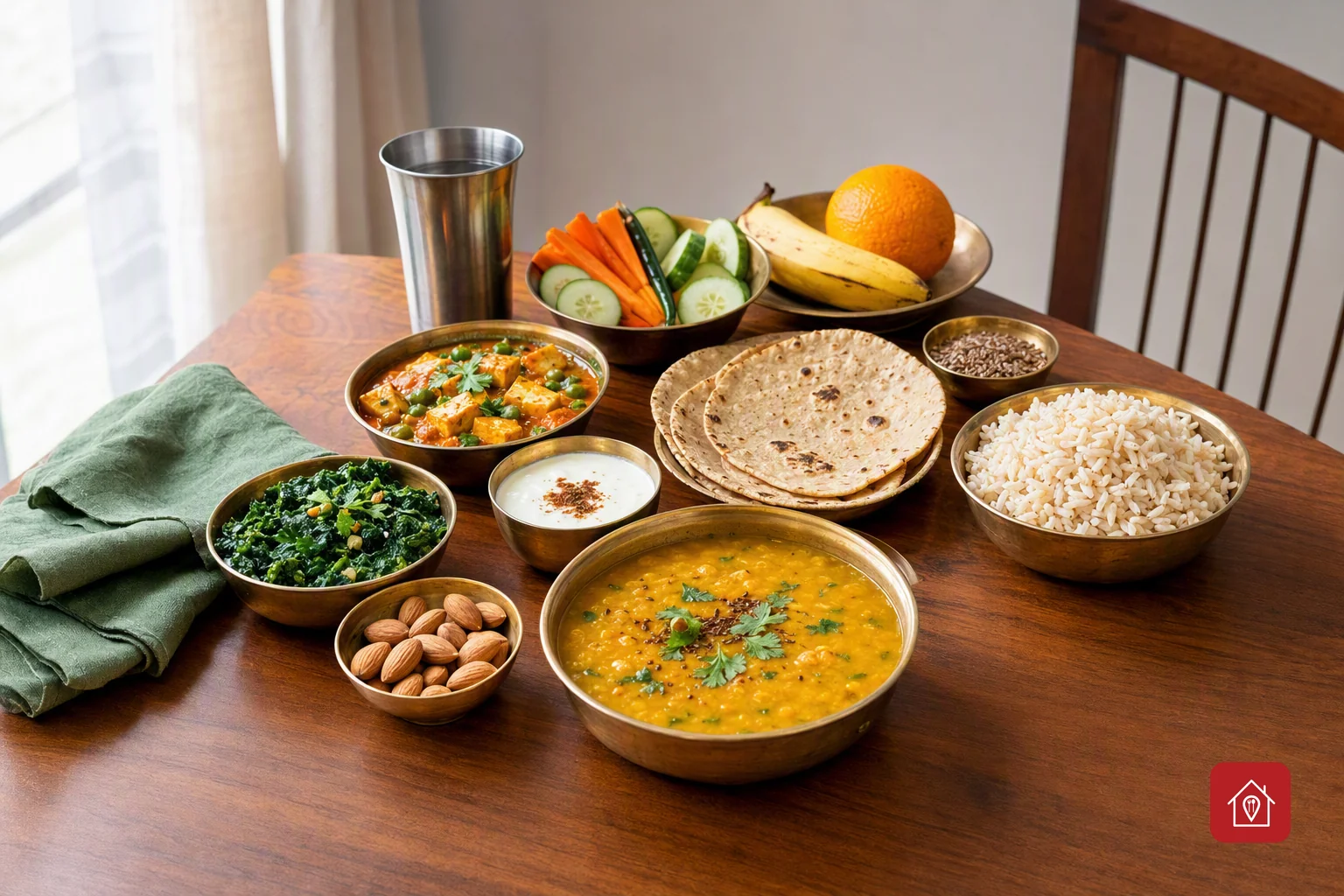
A balanced Indian plate brings together carbohydrates, proteins, fats, vitamins, minerals, water, and fibre. Here’s an example of a nourishing meal:
- Carbohydrates: Rice or roti
- Proteins: Dal, paneer, or curd
- Vegetables: Seasonal sabzi and salad
- Fats: Ghee or sesame
- Hydration: Water or chaach
Examples of Carbohydrates, Proteins, and Fats in Indian Foods
- Carbohydrates: Rice, atta, poha, bajra, oats
- Proteins: Dal, chana, paneer, eggs, chicken
- Fats: Ghee, groundnut oil, sesame, coconut
How AnyFeast Simplifies Nutrition
AnyFeast makes balanced eating effortless with AI recipe suggestions tailored to your preferences. Its Leftover Magic feature transforms yesterday’s dal or sabzi into fresh meals, while Smart Shopping ensures doorstep delivery of essentials like dals, vegetables, and fruits. With AnyFeast, nourishing your family becomes convenient and enjoyable.
Conclusion
Nutrition is about balance, variety, and making everyday meals work harder for your health. Start with small changes—add a vegetable to your dal, pair rice with curd, or include fruit as a snack. Let AnyFeast’s AI recipe suggestions inspire you to create balanced Indian meals, and use its Smart Shopping and Leftover Magic features to simplify your routine. Begin your journey to better nutrition today with AnyFeast!
Related Reading
- The New Era of Fitness Foods: A Sustainable Revolution in the Indian Kitchen
- 7 Indian Foods That Have Survived Over 500 Years
- Herbal Meat Sauce Recipe: Indian-Spiced Chicken, Lamb or Paneer