Healthy Eating on a Budget in India: Simple Ways to Spend Less and Eat Better
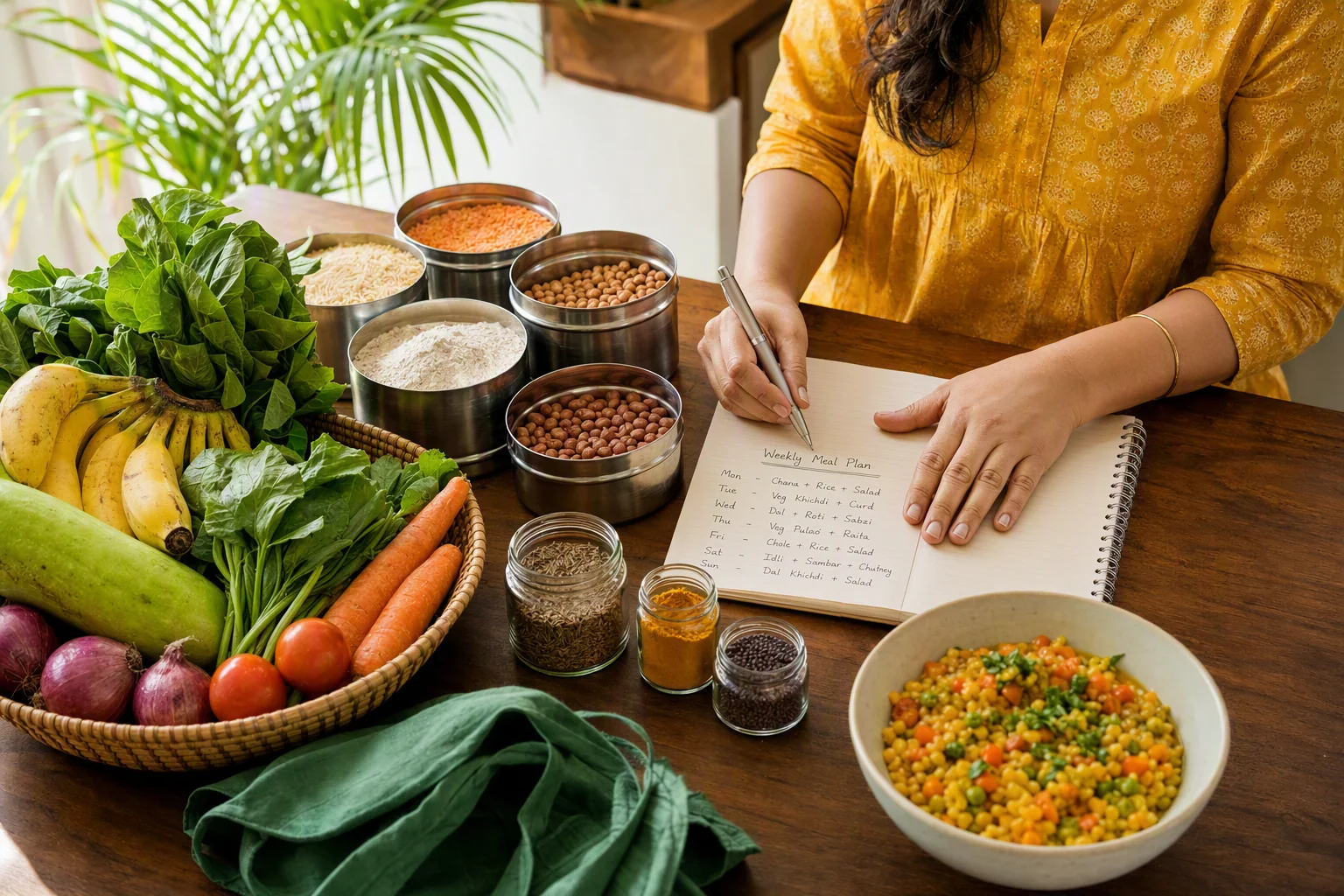
Eating well does not have to mean watching your grocery bill climb every week. In fact, healthy eating on a budget in India can begin with the everyday ingredients already familiar in your kitchen: dal, rice, atta, seasonal sabzi, bananas, curd and a handful of comforting spices.
The secret is not buying expensive “health” foods or following complicated meal plans. It is choosing simple, versatile ingredients wisely, cooking with a little intention, and making sure the food you bring home is actually used. A bowl of moong dal khichdi with vegetables, palak chana, lauki paratha, rajma rice or a banana-peanut smoothie can be nourishing, filling and wonderfully economical when planned well.
For many Indian households, the biggest challenge is not finding healthy food—it is finding the time to plan it around work, school, changing schedules and a limited monthly budget. That is where a few practical habits can make a real difference. Buying local seasonal vegetables such as spinach, gourds and beans, relying on affordable staples such as lentils and whole grains, and cooking larger batches for more than one meal can help stretch both ingredients and effort. Even small changes, such as turning leftover dal into paratha dough or using extra rice for vegetable pulao, can prevent waste and create something delicious.
AnyFeast makes this everyday planning feel far easier. Its AI recipe suggestions can help you turn the ingredients you already have into satisfying meal ideas, so that half-used vegetables and pantry staples do not sit forgotten. With Leftover Magic, yesterday’s cooked food can inspire today’s quick lunch or snack, while Smart Shopping helps you build a more thoughtful ingredient list for the week. Add doorstep ingredient delivery, and you can spend less time making rushed grocery decisions and more time enjoying wholesome home-cooked meals.
Whether you are cooking for one, feeding a family, or simply trying to make your monthly food budget go further, this guide will show you how to eat better without making food feel restrictive, bland or expensive.
Can You Eat Healthy on a Budget in India?
Yes— healthy eating on a budget in India is completely possible, and it does not require imported superfoods, speciality snacks or a pantry full of expensive packaged products. The most affordable route is often the most familiar one: build meals around Indian staples, choose vegetables in season, and cook in ways that make every ingredient work harder.
A nourishing plate can be wonderfully simple: dal with rice and a seasonal sabzi, roti with chana masala and curd, vegetable poha with peanuts, or millet khichdi with a squeeze of lemon. These meals offer comfort, variety and everyday practicality without putting unnecessary pressure on the monthly grocery budget.
Healthy does not have to mean “premium”
Many foods marketed as healthy come with premium packaging and prices. But a balanced Indian kitchen already has plenty of economical choices:
- Pulses and legumes: moong dal, masoor dal, toor dal, chana, rajma and kala chana are filling, versatile meal bases.
- Everyday grains: rice, atta, daliya, poha and millets can be used across breakfast, lunch and dinner.
- Seasonal vegetables: lauki, tinda, bhindi, pumpkin, cabbage, spinach, methi and beans are ideal for regular home cooking.
- Affordable fruit: bananas are easy to add to breakfast, smoothies or an evening snack.
- Smart flavour builders: jeera, haldi, mustard seeds, ginger, garlic, onions, tomatoes, coriander and lemon make basic ingredients taste exciting.
The aim is not perfection at every meal. It is creating a regular pattern of home-cooked food that includes grains, protein-rich dals or beans, vegetables and flavourful additions. A comforting bowl of sambar with rice, for example, can use dal, vegetables and spices in one economical pot. Likewise, besan chilla with grated vegetables can turn a modest pantry ingredient into a satisfying breakfast.
The budget advantage of planning before buying
Food spending often rises when meals are decided at the last minute. A rushed order, an extra packet of snacks, or vegetables bought without a recipe in mind can quietly make a weekly budget harder to manage. Planning even a few meals ahead gives each ingredient a purpose.
For instance, one bunch of palak can become palak dal on one day and stuffed palak parathas on another. A batch of boiled chana can be used in chaat, chana pulao or a quick salad. Tomatoes, onions and ginger-garlic can form the base for several dishes through the week instead of being bought for just one recipe.
AnyFeast makes this step especially convenient. Its AI recipe suggestions can turn the ingredients you have chosen into practical meal ideas, helping you avoid buying random extras. Use Smart Shopping to organise a focused grocery list around your planned dishes, then have ingredients delivered to your doorstep without the temptation of impulse purchases.
Think value, not just the lowest price
The cheapest item is not always the best value if it goes unused. A large pack of an unfamiliar ingredient, a highly processed snack, or vegetables that are left to spoil can cost more in the long run than a small, well-planned shop .
Choose ingredients you can use in multiple ways, cook enough for planned leftovers, and lean into seasonal Indian produce. With a little preparation—and AnyFeast to keep meal ideas and shopping organised—eating better can feel both delicious and comfortably affordable.
Which Low-Cost Indian Foods Give You the Most Nutrition?
A low-cost healthy plate does not need speciality ingredients. The most useful foods are often the familiar ones that store well, stretch across several meals and pair easily with seasonal vegetables. For healthy eating on a budget in India , focus on ingredients that can play more than one role: a breakfast base, a lunch accompaniment, a dinner main or a leftover-friendly addition.
The real saving comes from combining these foods thoughtfully. A bowl of rice with masoor dal and cabbage sabzi, for example, uses humble staples but still feels complete and comforting. Likewise, leftover chana can become tomorrow’s chaat, while extra palak can be folded into dough instead of being forgotten in the fridge.
AnyFeast makes these combinations easier to discover. Its AI recipe suggestions can recommend meals around the dals, grains and vegetables already in your kitchen, while Smart Shopping helps you buy only what your planned dishes need. That means less waste, fewer last-minute purchases and more nourishing Indian meals made from ingredients that genuinely work hard for your budget.
How Does Seasonal and Local Produce Cut Your Grocery Bill?
Seasonal, locally grown produce is one of the simplest ways to make healthy eating on a budget in India feel achievable. When a fruit or vegetable is widely available in your area, it is usually easier to find fresh, requires less travel and handling, and gives you more choice at the market. Instead of building meals around costly packaged products or out-of-season vegetables, let the sabzi mandi guide your weekly menu.
Let the market’s abundance shape your meals
A market pile-up of fresh lauki, tinda, pumpkin, bhindi, cabbage or palak is a useful signal: these ingredients can become the foundation of several satisfying meals. Buy the vegetables that look plentiful, fresh and appealing, then plan flexible recipes around them.
For example, one pumpkin can stretch across a family’s menu in different forms:
- Pumpkin sabzi with jeera, ginger and a little amchur for lunch with rotis
- Pumpkin dal for a comforting rice-and-dal dinner
- Pumpkin parathas using leftover cooked sabzi as a spiced filling
- Roasted pumpkin pieces folded into a simple grain bowl with chana and curd
The same approach works beautifully with lauki. Make lauki chana dal one day, grate a little into besan chilla the next morning, and use any remaining cooked lauki in atta for soft rotis. One well-chosen vegetable can support several meals without making the week’s food feel repetitive.
Choose local produce over complicated ingredients
Healthy meals do not need a long list of speciality items. Indian kitchens already have access to economical ingredients that bring flavour, texture and colour to ordinary dal, rice and roti meals.
Keep an eye out for:
- Leafy greens: palak, methi and locally available greens can brighten dal, poha, thepla dough and chilla.
- Gourds: lauki, tinda and other gourds suit dry sabzis, curries, dals and paratha fillings.
- Everyday vegetables: cabbage, cauliflower, carrots, onions and tomatoes are easy to combine with pantry staples.
- Fruit for snacks: bananas are particularly practical for breakfast, smoothies, porridge and quick homemade pancakes.
- Fresh herbs and flavour builders: coriander, mint, ginger, green chillies, lemon and curry leaves can make modest ingredients taste vibrant.
This style of cooking also encourages variety across the month. Rather than buying the same vegetables every week out of habit, rotate your choices according to what is available locally. Your meals stay interesting, and your grocery basket stays focused on ingredients that can be used in more than one dish.
Plan for the whole vegetable, not just one recipe
Before buying produce, decide how each item will be used across the week. If you bring home palak, plan it early in the week for palak dal, stuffed rotis or a quick stir-fry. If cabbage is on the list, earmark it for a dry sabzi, vegetable pulao and a crunchy chana salad. This small planning habit prevents half-used vegetables from being pushed to the back of the fridge.
AnyFeast makes this particularly effortless. Enter the vegetables you have bought into AI recipe suggestions to find Indian meals that suit your pantry and preferences. Then use Smart Shopping to create a precise ingredient list for the dishes you actually intend to cook. With less impulse buying and a clearer plan for every lauki, bunch of palak and dozen bananas, fresh home cooking becomes both more economical and more enjoyable.
How Do You Build a Healthy Weekly Meal Plan Without Overspending?
A healthy weekly meal plan does not need seven elaborate menus or a trolley full of expensive “health foods”. The most practical approach is to plan a small set of versatile building blocks, then turn them into different meals through the week. This keeps cooking manageable on busy days while helping every ingredient earn its place in the kitchen.
Start with a quick kitchen inventory
Before making a shopping list, check what you already have: rice, atta, dals, chana, spices, onions, frozen peas, curd or a few vegetables that need using soon. Planning around these items prevents duplicate purchases and makes the week’s budget go further.
A simple inventory might reveal the beginnings of several nourishing meals:
- Masoor dal, rice and spinach for palak dal with rice
- Atta, curd and leftover sabzi for stuffed parathas
- Chana, onion, tomato and lemon for chana chaat or a hearty salad
- Poha, peanuts and curry leaves for a quick breakfast
- Cooked rice and mixed vegetables for vegetable fried rice or lemon rice
AnyFeast’s AI recipe suggestions can turn this cupboard check into a useful meal plan. Add the ingredients you already own, choose Indian flavours and household preferences, and discover recipes designed around what is available. It is an easy way to avoid buying a new ingredient for every single dish.
Choose a few meal anchors for the week
For healthy eating on a budget in India, plan around familiar meal anchors rather than attempting a completely different cuisine every day. A good weekly structure can include:
- Two to three dal-based dinners , such as moong dal tadka, rajma-style bean curry or sambar with vegetables
- Two vegetable-and-roti meals , using seasonal sabzi with curd, salad or a bowl of dal
- One one-pot meal , such as vegetable khichdi, millet pulao or chana pulao
- One leftover-led meal , such as parathas, vegetable cutlets, mixed dal chilla or fried rice
- Easy breakfasts based on poha, upma, besan chilla, oats, idli or fruit with curd
This is not a rigid timetable. It is a helpful map that answers the everyday question, “What should we cook tonight?” while ensuring that proteins, grains, vegetables and fruit appear regularly.
Batch-cook the parts, not every finished meal
Batch cooking is most useful when it saves prep work without leaving you eating identical food for days. Cook a larger portion of plain dal, soaked chana or rajma, rice, and a basic onion-tomato masala. Store them safely and use them in different combinations.
For instance, cooked chana can become chana masala one evening, a chana-and-cucumber salad for lunch, and a filling for wraps or stuffed rotis. A pot of dal can be served simply with rice, enriched with vegetables the next day, or blended into dough for savoury chilla.
Make one focused Smart Shopping list
Once the meals are roughly decided, use AnyFeast Smart Shopping to build a list organised around the recipes you have chosen. Buy only the fresh produce, dairy and pantry top-ups required, rather than adding random packaged snacks or duplicate staples to the basket.
Keep the list flexible with one or two “swap” meals. If bhindi looks fresher than beans, or pumpkin is better value than cauliflower, choose it confidently and let AnyFeast suggest a suitable recipe. That balance of planning and seasonal flexibility is what makes budget-friendly healthy cooking feel realistic all week long.
What Can You Batch Cook for Fast, Affordable Indian Meals?
Build a flexible Indian batch-cooking base
The most practical batch cooking is not about preparing seven identical lunch boxes. It is about giving your future self a head start with versatile components that can become different meals through the week. For a busy Indian household, this means cooking plain, adaptable basics and changing the tadka, vegetables or accompaniment each day.
Set aside a little time once or twice a week to prepare ingredients that work across breakfast, lunch and dinner:
- Cooked lentils and beans: moong dal, masoor dal, kala chana, kabuli chana or rajma
- Grains: steamed rice, millet, daliya or a small batch of cooked poha ingredients
- Vegetable prep: washed spinach, chopped gourds, grated carrot, sliced capsicum and peeled peas
- Flavour bases: ginger-garlic paste, green chutney, roasted peanuts and a simple onion-tomato masala
- Dough and batters: atta dough for rotis or parathas, besan chilla batter, and idli or dosa batter if it suits your routine
These building blocks make healthy eating on a budget in India far easier on rushed evenings. Instead of ordering a costly last-minute meal or reaching for packaged snacks, you have the foundations for a wholesome plate already in the kitchen.
Turn one batch into several meals
A well-planned batch should earn its space in the fridge by appearing in more than one dish. Think of each cooked ingredient as an opportunity, not a leftover that must be repeated exactly.
For example, a batch of plain cooked moong dal can become:
- Moong dal tadka with jeera, garlic and tomato, served with rice
- Vegetable dal with spinach, lauki or pumpkin stirred in
- Dal paratha dough , made by kneading thick leftover dal into atta with spices
- Moong soup for a light supper, finished with lemon and black pepper
- Khichdi with rice, seasonal vegetables and a spoonful of ghee
Likewise, cooked rice can be transformed into lemon rice with peanuts, vegetable pulao with frozen peas, curd rice with cucumber, or a quick rice-and-dal bowl topped with sautéed spinach. The flavours feel fresh even though the smart prep happened earlier.
Keep the batch simple, then season at mealtime
Where possible, cook staples with minimal seasoning. Plain chickpeas, rice or dal can move easily between Indian dishes, while a heavily spiced curry is harder to reinvent. Add tempering, masala and finishing ingredients just before serving so every meal tastes lively.
Keep a few economical flavour boosters ready: curry leaves, coriander, green chillies, lemon, roasted jeera powder, mustard seeds and peanuts. A small handful can give the same base ingredients an entirely different direction without increasing the grocery bill.
AnyFeast’s AI recipe suggestions are especially helpful here. Add “cooked rajma”, “rice”, “spinach” or “atta” to your available ingredients, and the suggestions can help you choose a meal that uses what is already prepped rather than sending you out for extra items.
Portion, store and plan the next use
Divide larger batches into meal-sized containers so you only take out what your family needs. Label containers mentally or clearly: dal for Tuesday dinner , chana for salad , rice for Friday lunch . This small habit prevents forgotten food from sinking to the back of the fridge.
When you are ready to plan the next batch, use AnyFeast Smart Shopping to add only the fresh ingredients that complete your prepared staples. With doorstep ingredient delivery, it is simple to top up on spinach, curd, bananas, tomatoes or seasonal gourds without an unplanned supermarket haul. Batch cooking then becomes what it should be: a calm, affordable shortcut to better everyday meals.
How Can You Shop Smarter and Avoid Costly Processed Foods?
A healthy food budget is often won or lost at the shop, not at the stove. The goal is not to buy the cheapest item in every aisle; it is to choose ingredients that offer several satisfying meals, keep well and need very little packaging or preparation. For healthy eating on a budget in India, a basket built around everyday whole foods is both practical and flavourful.
Start with a short, flexible shopping list
Shopping without a plan can lead to duplicate purchases, impulse snacks and ingredients that never get used. Before ordering or stepping out, check your fridge, freezer and pantry. Then make a list around what needs using first.
A simple budget-friendly list might include:
- Staples: atta, rice, poha, daliya, oats, millets or whole grains
- Protein-rich basics: moong dal, masoor dal, chana, rajma, peanuts, eggs or paneer
- Seasonal vegetables: lauki, tori, pumpkin, bhindi, cabbage, spinach, carrots or beans
- Low-cost fruit: bananas, guava or whichever local fruit is in season
- Flavour essentials: onions, tomatoes, ginger, garlic, lemon, coriander, green chillies and basic spices
Keep the list flexible rather than insisting on one particular vegetable. If spinach is fresh and affordable, choose it; if a seasonal gourd is the better value that week, build meals around that instead. This approach keeps your cooking varied while making the most of local produce.
Buy in bulk where it genuinely helps
Dry goods are ideal for sensible bulk buying because they are versatile pantry staples. Larger packs of rice, atta, dals, chana, rajma, peanuts and spices can make everyday meals easier to plan. Store them in clean, dry, airtight containers so they remain organised and visible.
However, bulk buying is only smart when your household will use the ingredient. Avoid filling the kitchen with unfamiliar grains, sauces or oversized snack packets simply because they appear economical. The best-value food is the food you finish.
AnyFeast Smart Shopping brings useful structure to this decision. Once you have chosen your meals, it helps you focus on the ingredients required, so your order supports the week’s menu rather than a cupboard full of random extras. With doorstep ingredient delivery, topping up on essential fresh produce is wonderfully convenient too.
Make processed foods the exception, not the default
Highly processed snacks, ready-to-heat meals, sugary drinks and instant foods can quietly inflate a grocery bill. They may feel convenient in the moment, but they often disappear quickly and do not offer the flexibility of basic ingredients.
Swap a few regular purchases with easy whole-food alternatives:
- Replace packaged namkeen with roasted chana, peanuts, makhana or homemade chivda .
- Choose fruit, curd or a banana-peanut snack instead of sweet biscuits for an everyday bite.
- Keep poha, upma ingredients, besan and oats for quick breakfasts and evening meals.
- Turn a simple onion-tomato base, dal or leftover vegetables into a fast meal rather than relying on instant packets.
- Carry water from home when possible instead of routinely buying sugary beverages.
These are not restrictive swaps. They create a kitchen where a warm bowl of vegetable poha, besan chilla with chutney, dal-chawal, or paneer bhurji is always within reach.
Let your ingredients do more than one job
The most economical basket contains ingredients with multiple uses. Curd can become raita, kadhi, a marinade or a smoothie base. Besan works in chilla, kadhi and vegetable coating. Peanuts add crunch to poha, lemon rice and salads, while seasonal spinach can go into dal, parathas, pulao or a simple sabzi.
Use AnyFeast’s AI recipe suggestions to discover these useful overlaps. Tell it what you already have, such as atta, curd, spinach and tomatoes, and choose recipes that build on those ingredients. It is a simple way to shop with purpose, reduce costly processed-food habits and make every rupee in your food budget work harder.
How Can You Turn Leftovers into Healthy Meals Instead of Food Waste?
A well-planned kitchen still produces leftovers: a bowl of dal, a little rice, two rotis, a spoonful of sabzi, or chopped vegetables that need using soon. Treating these as meal starters rather than scraps is one of the easiest ways to make healthy eating on a budget in India feel practical every day.
The key is safe, timely use. Cool cooked food promptly, store it covered in the refrigerator, and reheat only the portion you plan to eat until piping hot. Then give it a fresh identity with vegetables, herbs, curd, eggs or paneer.
Give everyday leftovers a second meal
A few simple transformations can turn last night’s dinner into a satisfying breakfast, tiffin or quick weeknight meal:
- Leftover dal: Make dal parathas by kneading it into atta with jeera, coriander and a little chilli. Or add seasonal vegetables and rice to create a one-pot dal khichdi.
- Cooked rice: Sauté with mustard seeds, curry leaves, peanuts, turmeric and lemon for lemon rice. Add chopped spinach, peas, carrots or beans to make it more colourful and filling.
- Rotis: Tear into small pieces for masala roti upma with onions, tomatoes and vegetables. They also make an easy wrap for paneer bhurji, chana or leftover sabzi.
- Dry sabzi: Mash leftover aloo-gobi, cabbage, beans or mixed vegetables into besan chilla batter, stuff it into a paratha, or use it as a sandwich filling.
- Plain curd and vegetables: Blend into a cooling raita, or use them in kadhi with rice or roti for a comforting low-effort meal.
- Fruit that is becoming very ripe: Blend bananas into a smoothie with curd and peanuts, or mix into oats for a naturally sweet breakfast.
This is not about disguising food beyond recognition. It is about adding a new texture, seasoning or format so the meal feels intentional.
Start a “use first” shelf in the fridge
Keep leftovers, opened ingredients and produce that is close to ripening together at eye level. A small container of coriander stems, half an onion, cooked chana or a cup of rice can be forgotten behind newer groceries; placing them in one visible zone makes them easier to use.
Before planning tomorrow’s meal, check this shelf first and ask: What can become a filling, vegetable-forward dish today? Even a handful of spinach, one tomato and leftover dal can become a quick dal soup or a thick, satisfying sabzi.
Let AnyFeast turn odds and ends into ideas
AnyFeast’s Leftover Magic is made for those in-between ingredients that often lead to waste. Add what is already in your kitchen—perhaps cooked rice, lauki, curd, rotis and a little paneer—and get recipe inspiration that helps you turn them into a proper meal. It takes the guesswork out of using small quantities well.
You can also use AnyFeast’s AI recipe suggestions to build meals around what needs finishing first, then use Smart Shopping only for the few ingredients needed to complete the plan. With convenient doorstep ingredient delivery, there is no need to overbuy “just in case”.
A leftover-powered meal can be delicious, nourishing and remarkably economical. When every bowl of dal, roti and seasonal vegetable gets a second chance, your weekly food budget stretches further without making healthy home cooking feel like a compromise.
How Can AnyFeast Help You Plan Cheaper, Healthier Meals?
Healthy eating on a budget in India becomes far simpler when the planning work does not fall entirely on you. AnyFeast brings recipes, ingredient planning and doorstep convenience into one practical routine, helping you make better use of what is already in your kitchen while buying only what your meals genuinely need.
Start with meals your household will actually enjoy
A budget plan only works when it suits your tastes, schedule and usual cooking style. With AnyFeast’s AI recipe suggestions , you can find ideas built around everyday Indian ingredients: dal, rice, atta, paneer, curd, chana, spinach, seasonal gourds and familiar masalas.
Instead of deciding on dinner at the last minute and ordering extra items impulsively, use the suggestions to plan a few flexible meals ahead. For example, a simple week could include:
- Moong dal khichdi with seasonal vegetables for an easy dinner
- Chana masala with roti for a filling lunch
- Palak paneer with rice or phulkas
- Vegetable poha or besan chilla for breakfast
- Lauki chana dal or mixed-vegetable sabzi using local produce
The idea is not to buy a long list of special ingredients for every recipe. It is to choose meals that share core items. One bunch of spinach can work in dal, parathas and a quick stir-fry; curd can become breakfast, raita or kadhi; and a batch of cooked chana can stretch across salads, wraps and curries.
Shop with a clear list, not a cart full of maybes
The small unplanned additions during a grocery run can quickly make a food budget feel stretched. AnyFeast’s Smart Shopping helps you organise the ingredients needed for your chosen meals, so your shopping is linked to an actual plan rather than a vague intention to “eat healthy”.
This makes it easier to prioritise:
- Seasonal vegetables such as lauki, tori, pumpkin, spinach and cabbage
- Versatile staples including rice, millets, oats, atta, dals and beans
- Affordable flavour-builders like onions, tomatoes, ginger, garlic, jeera, mustard seeds and lemons
- Protein-rich basics such as paneer, curd, eggs or chana, according to your preference
You can then use AnyFeast’s convenient doorstep ingredient delivery for the essentials, avoiding rushed trips that often lead to duplicate purchases or unnecessary packaged snacks. A well-planned basket leaves more room in the budget for good-quality staples and fresh produce.
Make leftovers part of the plan, not an afterthought
The most economical meal plan is one that accounts for what is already cooked. AnyFeast’s Leftover Magic can help you turn yesterday’s rice, dal, rotis or sabzi into a fresh meal idea, rather than letting small portions sit unused in the fridge.
Have leftover rajma and rice? Turn them into a stuffed wrap or a hearty bowl with chopped vegetables and curd. Have a little paneer, spinach and atta? A quick stuffed paratha can become tomorrow’s tiffin. This approach supports healthy eating on a budget in India because every ingredient has more than one possible purpose.
Build a calmer weekly routine
Try planning a few meals, not every single bite, then leave space for leftovers and seasonal market finds. Use AnyFeast to choose recipes, check what you have, create a focused shopping list and bring in only the ingredients required to complete your meals.
That combination of AI-guided recipe inspiration, Smart Shopping, Leftover Magic and doorstep delivery makes healthy home cooking feel organised, affordable and genuinely enjoyable—without wasting food or spending more than necessary.
What Does a Budget-Friendly Healthy Indian Week Look Like?
A budget-friendly healthy week does not need a different shopping list for every day. The smartest approach is to choose simple Indian meals that overlap in ingredients, make use of one or two batch-cooked basics, and leave room for leftovers. Think cooked dal, rice, chana, chopped vegetables, curd and atta working in several ways across the week.
Here is a practical example of healthy eating on a budget in India for a household that wants familiar, nourishing meals without relying on expensive packaged foods.
The meals are intentionally flexible. If paneer is not on your list that week, swap it for eggs, soy chunks, extra dal or chana. If lauki is not fresh at the market, choose tori, pumpkin, cabbage or another seasonal vegetable. This keeps the plan practical while helping your grocery basket follow what is readily available.
A little preparation makes this routine even easier: soak beans overnight, cook a pot of dal or chana, prepare a basic onion-tomato masala, and keep washed greens ready for quick use. You are not cooking an entire week in advance; you are simply giving weekday meals a helpful head start.
AnyFeast makes this kind of weekly rhythm delightfully simple. Use its AI recipe suggestions to find meals based on the ingredients you already have, then use Smart Shopping to build a focused list for the remaining essentials. When small portions are left over, Leftover Magic can inspire the next meal instead of letting good food go unused. With planned ingredients delivered to your doorstep, a wholesome Indian week can feel less like a daily puzzle and more like a satisfying, budget-conscious routine.
Conclusion
Healthy eating on a budget in India does not mean settling for bland or repetitive meals. It is about making everyday ingredients work harder: choosing seasonal vegetables, building meals around dals, rice and whole grains, and cooking with a clear plan. A well-stocked pantry, sensible bulk buying and a little batch preparation can make home-cooked food both more affordable and easier to manage.
Most importantly, use what you buy. Turning small portions of dal, rice or sabzi into a new meal keeps waste low while bringing welcome variety to the table.
- Choose local, seasonal produce such as gourds, leafy greens and bananas for flexible, value-led meals.
- Buy regularly used dry staples in bulk, but purchase fresh produce in quantities you can realistically use.
- Keep quick homemade snacks ready to reduce reliance on packaged convenience foods.
- Refrigerate leftovers promptly and transform them into parathas, wraps, pulao, cutlets or other simple meals.
With AnyFeast, healthy eating on a budget in India feels even more achievable. Let AI recipe suggestions inspire meals from your existing ingredients, use Smart Shopping to stay focused at checkout, and try Leftover Magic whenever your fridge needs a creative refresh. Plan smarter, waste less and enjoy nourishing meals with AnyFeast.
Related Reading
- Healthy Meals Start with Planning: Your Ultimate Guide to Meal Mastery in India
- 7 Days of Healthy Meals on a Budget
- What Ayurveda Taught Me About Mindful Eating