Health Benefits of Ghee: Ayurveda, Nutrition and What Science Says
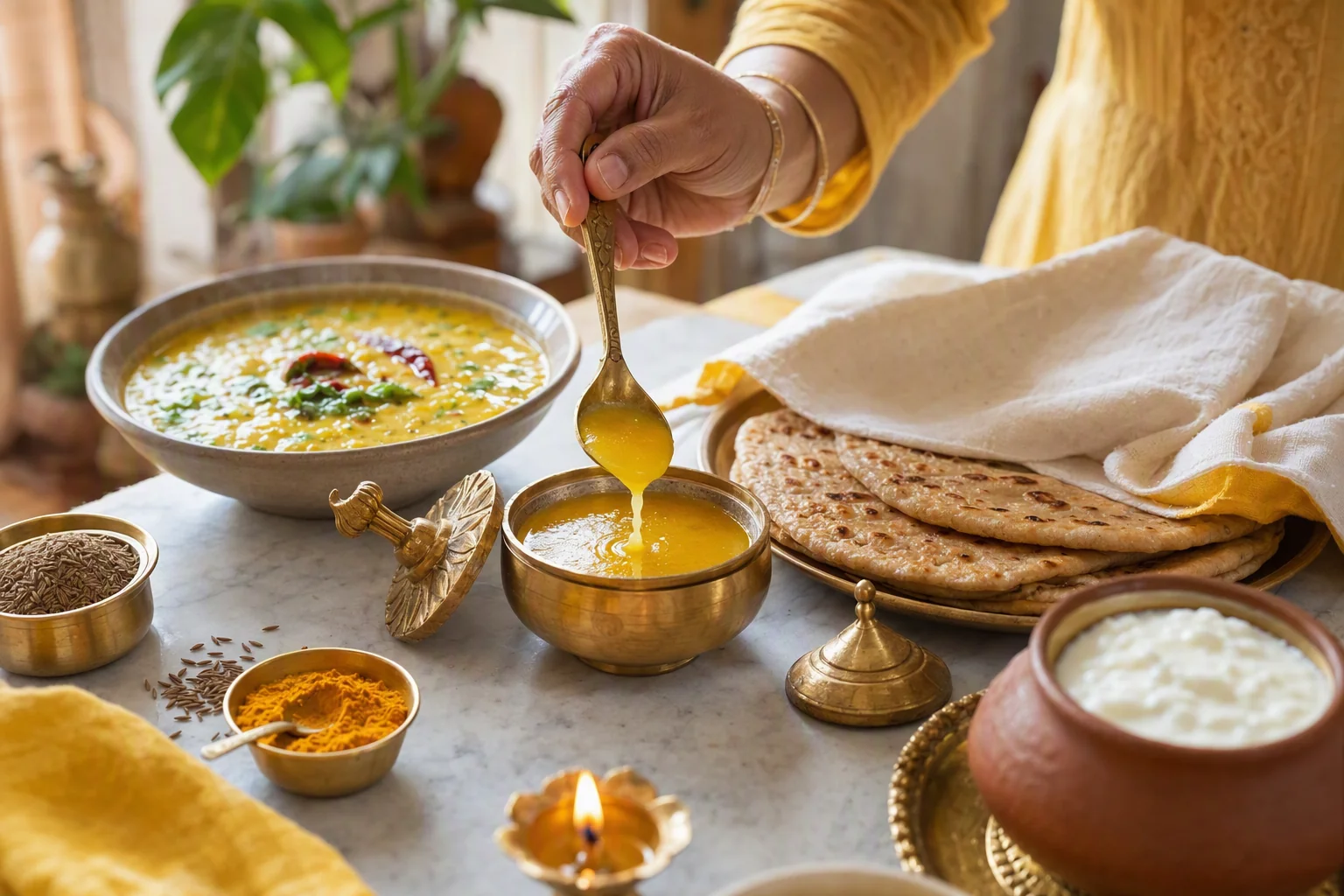
The Golden Goodness of Ghee: Health Benefits and How to Use It in Indian Cooking
A single spoonful of ghee can evoke the warmth of home-cooked dal, the aroma of festive halwa, and the wisdom of centuries of Indian culinary tradition—all packed into one golden ingredient. From drizzling over hot rotis to enriching khichdi, laddoos, and temple prasad, ghee has been a cherished staple in Indian kitchens for generations. But with evolving conversations around fats and wellness, many are asking: what are the real health benefits of ghee?
Ghee, revered in Ayurveda as Mahagrita , is considered a nourishing food that promotes vitality and longevity. Modern nutrition supports this ancient wisdom, highlighting ghee’s rich content of Omega-3 and Omega-6 fatty acids, conjugated linoleic acid (CLA), and fat-soluble vitamins A, D, E, and K. However, as a calorie-dense fat with high saturated-fat content, moderation is key. In this guide, we’ll explore the Ayurvedic benefits of ghee, its nutritional profile, and practical ways to incorporate it into your daily meals with the help of AnyFeast .
What Are the Health Benefits of Ghee?
A Traditional Food with Modern Nutrition Benefits
The health benefits of ghee lie at the intersection of ancient Ayurvedic wisdom and modern nutritional science. In Indian cuisine, ghee is far more than just a cooking fat—it’s a symbol of nourishment and comfort. Ayurveda celebrates ghee for its rejuvenating properties, describing it as Mahagrita , or "great nourishment," that supports digestion, vitality, and balance.
From a scientific perspective, ghee is a powerhouse of nutrients. It contains:
- Omega-3 and Omega-6 fatty acids: Essential fats that support brain and heart health.
- Conjugated linoleic acid (CLA): A naturally occurring fatty acid linked to various health benefits.
- Fat-soluble vitamins (A, D, E, K): Essential for immunity, bone health, and skin nourishment.
While ghee is nutrient-rich, its high saturated-fat content means it should be consumed in moderation. A small amount can enhance the flavor and nutritional value of your meals without tipping the balance.
Ayurvedic Benefits of Ghee: Nourishment and Balance
In Ayurveda, ghee is considered a cornerstone of a balanced diet. It is believed to:
- Support digestion: Ghee is thought to kindle agni (digestive fire), making meals more digestible and satisfying.
- Promote vitality: It is associated with strength, energy, and longevity.
- Enhance complexion: Ghee is traditionally linked to healthy, glowing skin.
Here are some traditional ways to use ghee in Indian cooking:
- Drizzle ghee over dal-rice or khichdi for a comforting finish.
- Brush a light layer on phulkas for a fragrant touch.
- Use ghee in tadka with jeera, hing, and curry leaves to elevate dals and sabzis.
- Add it to festive sweets like halwa, laddoos, or panjiri for richness and flavor.
While these uses are rooted in tradition, they align with modern nutrition’s emphasis on balanced meals that include healthy fats, fiber, and protein.
Ghee Nutrition Facts Per Tablespoon
Ghee is a concentrated source of energy and nutrients. Here’s a breakdown of its nutritional profile per tablespoon (approximately 14 grams):
Is Ghee Good for Heart Health?
The relationship between ghee and heart health is complex. While ghee is known to increase HDL ("good" cholesterol), its high saturated-fat content necessitates moderation. Here’s how to include ghee in a heart-conscious diet:
- Use ghee sparingly—just a teaspoon for a family-sized dal or a light brush on rotis.
- Pair ghee with fiber-rich foods like dals, whole grains, and vegetables to balance its fat content.
- Avoid combining ghee with other rich, fatty foods in the same meal.
For those with specific health conditions, it’s best to consult a healthcare professional for personalized advice. AnyFeast can help you plan heart-healthy meals that incorporate ghee in balanced, delicious ways.
Best Way to Use Ghee in Indian Cooking
Ghee is a versatile ingredient that can elevate the simplest of dishes. Here are some ideas:
Breakfast
- Parathas: Use a small amount of ghee for cooking and pair with curd and pickle.
- Poha: Start with a ghee tempering of mustard seeds, curry leaves, and peanuts.
- Dalia: Stir in a teaspoon of ghee for a nutty flavor.
Lunch and Dinner
- Dal: Finish with a ghee tadka for aroma and richness.
- Rice dishes: Add a drizzle of ghee to steamed rice or use it in biryani and pulao.
- Sabzis: Toss roasted vegetables with ghee and spices for a flavorful side.
Snacks and Sweets
- Makhana: Roast with ghee, turmeric, and chaat masala.
- Laddoos: Use ghee as a binding agent in festive sweets.
- Panjiri: Combine ghee with nuts, seeds, and atta for a nutritious treat.
With AnyFeast, you can discover new ways to use ghee in your cooking. From AI-powered recipe suggestions to Smart Shopping and doorstep delivery, AnyFeast makes it easy to create balanced, ghee-friendly meals.
Conclusion
Ghee is more than just a cooking fat—it’s a bridge between tradition and modern nutrition. Whether you’re exploring its Ayurvedic benefits or its nutritional profile, the key to enjoying ghee lies in mindful, balanced use.
- Celebrate its heritage: Use ghee to add warmth and flavor to traditional Indian dishes.
- Focus on balance: Pair ghee with fiber-rich, nutrient-dense foods for a wholesome meal.
- Plan with ease: Let AnyFeast simplify your cooking routine with AI-powered recipes, Smart Shopping, and fresh ingredient delivery.
Discover the joy of cooking with ghee while keeping your meals balanced and nourishing. Start planning your next meal with AnyFeast today!
Related Reading
- What Ayurveda Taught Me About Mindful Eating
- High-Protein Indian Breakfasts for Busy Office Mornings: 4 Easy 15-Minute Recipes
- What Is This Viral Thing That Looks Like Gulab Jamun but Tastes Like Coconut Laddoo?