Spiced Chayote And Vegetable Relish Recipe
Fusion cuisine · 600 calories
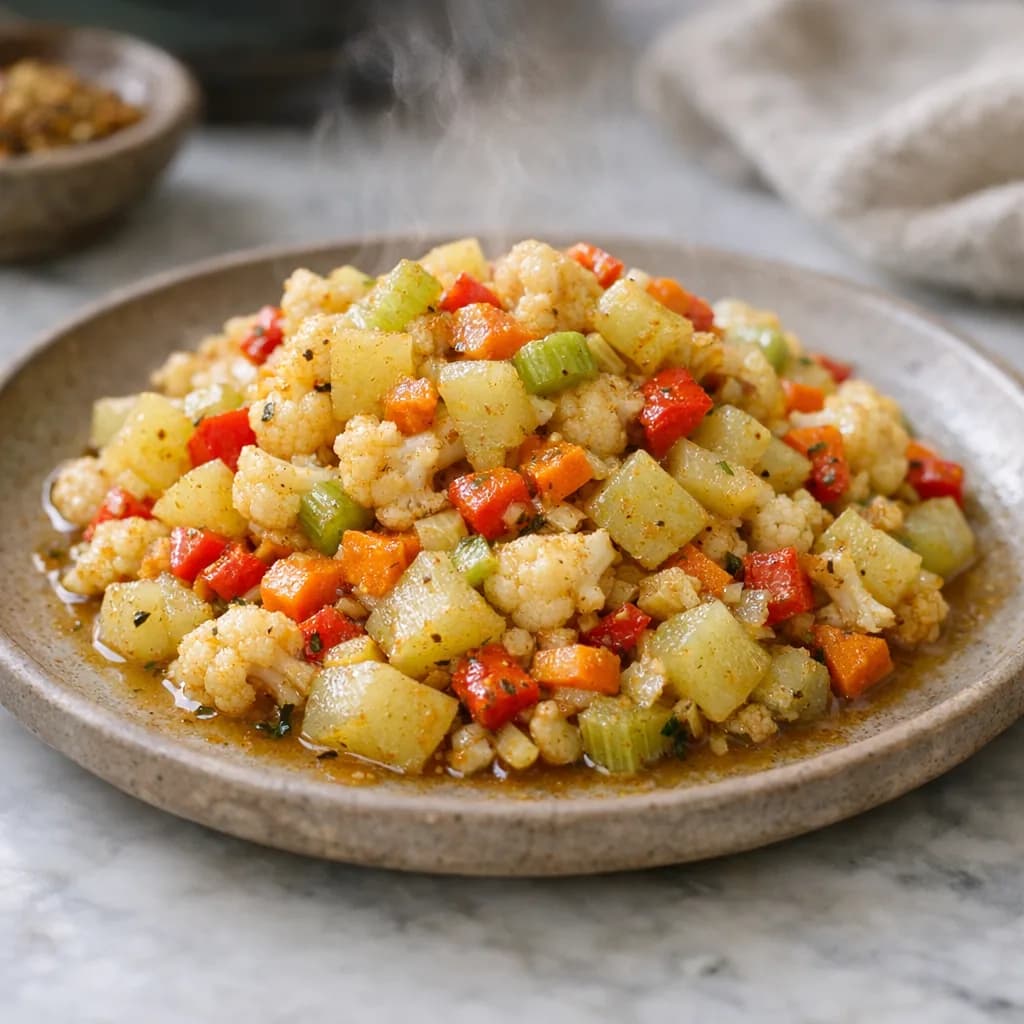
About this recipe
A vibrant and tangy vegan relish made with chayote, cauliflower, and a medley of vegetables, infused with warm spices and perfect for a flavorful dinner side.
Ingredients
- 50 g Cumin Powder
- 100 g Coriander Powder
- 1 piece Bottle Gourd
- - Ginger Powder
- 100 g Red Chili Powder
- Pcs Dnv Clove
- 1 kg Chilli Green
- 100 g Amchur Powder
- 110 g Unpeeled Garlic Cloves
- 500 g Carrot
- 100 g Sambar Onion Peeled
- 1 kg Whole Farm Grocery Sugar (Packet)
- 1 Piece Red Bell Pepper (Kempu Dappa Menasinakaayi)
- 300 g Organically Grown Cauliflower
- 1 kg Simply Staples Mineral Rich Sea Salt
- 500 ml I'Mwow Apple Cider Vinegar (With Mother)
- 50 g Whole Farm Premium Clove Whole (Laung)
- 100 g Celery Stalk
- 150 g Tatvahills Turmeric Powder With Black Pepper
Instructions
- 1. Peel the chayotes and cut them into small cubes.
- 2. Chop the cauliflower into small florets, dice the carrots, celery, red bell peppers, and onions into bite-sized pieces.
- 3. In a large kettle, combine the chayote, cauliflower, carrots, celery, red bell peppers, and onions. Sprinkle 1/2 cup of salt over the vegetables, mix well, and let them sit for 3 hours, stirring occasionally.
- 4. After 3 hours, drain any excess liquid from the vegetables. In a separate bowl, mix 5 cups of cider vinegar, 5 cups of sugar, 2 teaspoons of turmeric, and 1/2 teaspoon of ground clove until the sugar dissolves.
- 5. Pour the vinegar mixture over the vegetables in the kettle. Bring the mixture to a gentle boil over medium heat, then reduce the heat and simmer for 15 minutes, stirring occasionally.
- 6. Remove from heat and let the relish cool to room temperature. Transfer to sterilized jars and refrigerate. Serve as a tangy side dish or condiment for dinner.
How to make Spiced Chayote And Vegetable Relish
- Chop and salt. Peel and cube the chayotes, cut the cauliflower into small florets and dice the carrots, celery, red peppers and onions. Combine in a large pan, mix with 1/2 cup of salt and leave for 3 hours, stirring occasionally.
- Simmer the relish. Drain off the liquid. Mix 5 cups of cider vinegar, 5 cups of sugar, 2 teaspoons of turmeric and 1/2 teaspoon of ground clove until dissolved, pour over the vegetables, bring to a gentle boil and simmer for 15 minutes.
- Cool and store. Take off the heat and let the relish cool, then transfer to sterilised jars and refrigerate. Serve as a tangy side dish or condiment.
Frequently asked questions
- Why is salt added to the vegetables and left for 3 hours in this recipe?
- The salt helps draw out excess moisture from the vegetables, intensifying their flavor and improving the texture of the relish. This step ensures the vegetables remain crisp and do not become overly watery when combined with the vinegar mixture.
- What role does apple cider vinegar play in the Spiced Chayote and Vegetable Relish?
- Apple cider vinegar acts as the base for the tangy flavor and helps preserve the relish. Its acidity balances the sweetness of the sugar and enhances the spices, creating a well-rounded flavor profile.
- Can I adjust the sweetness or spice level in this relish?
- Yes, you can reduce the amount of sugar for a less sweet relish or increase the chili powder and green chilies for more heat. Taste the vinegar mixture before adding it to the vegetables to ensure the flavor matches your preference.
- How do I know when the relish is ready during the simmering stage?
- The relish is ready when the vegetables are tender yet still retain some crunch, and the liquid has slightly thickened. Be sure to stir occasionally to ensure even cooking and prevent sticking.
- What is the best way to store the Spiced Chayote and Vegetable Relish?
- Transfer the cooled relish to sterilized jars and refrigerate. Properly stored, it can last up to 2-3 weeks. Ensure the jars are sealed tightly to maintain freshness and prevent contamination.
- Can I substitute chayote with another vegetable in this recipe?
- Yes, you can substitute chayote with zucchini or cucumber, as they have similar textures and mild flavors. However, keep in mind that zucchini may release more moisture, so adjust the salt and draining process accordingly.