High-Protein Chickpea Flour Chapatis Recipe
Indian cuisine · 400 calories
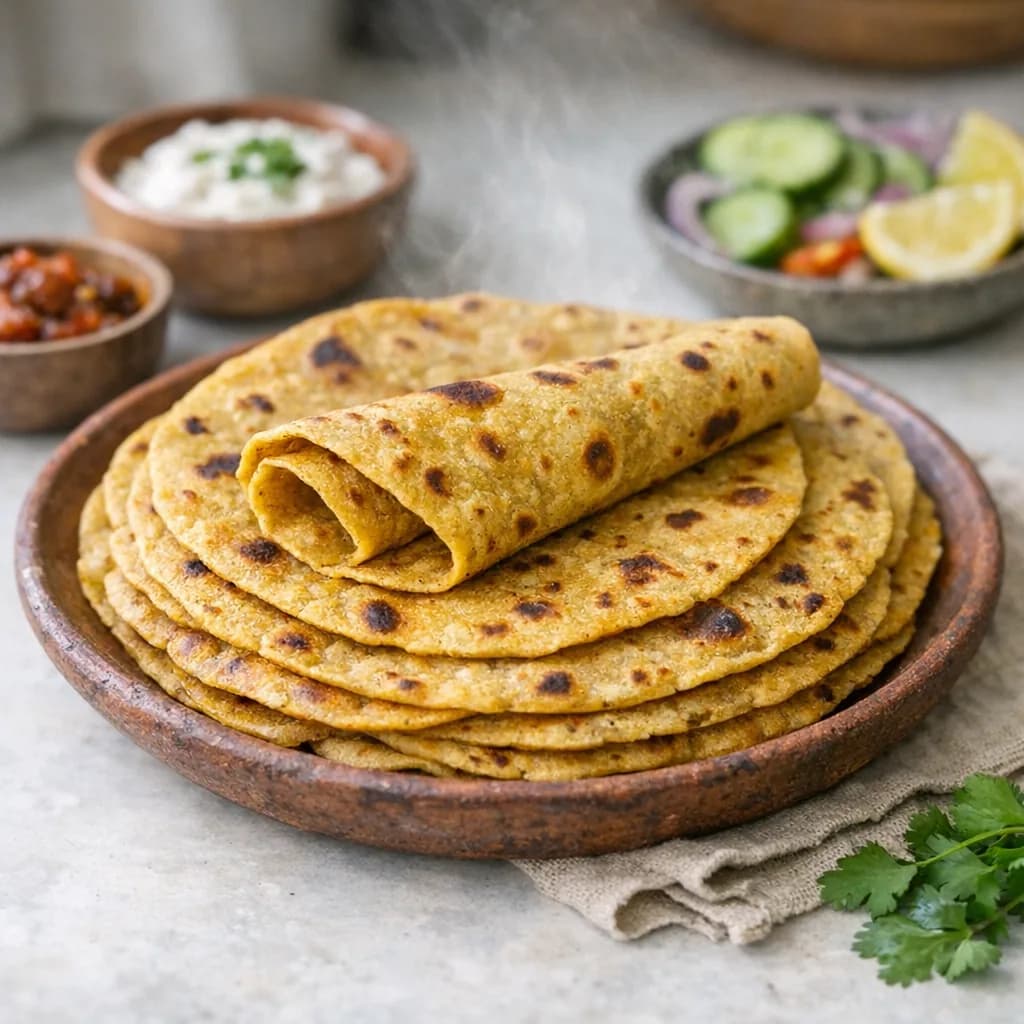
About this recipe
These high-protein chapatis are made with a blend of chickpea flour and whole wheat flour, perfect for a nutritious and satisfying dinner. Serve them warm with your favorite vegetarian curry or dip.
Ingredients
- 1 pack (1 kg) Naga Whole Wheat Atta
- 1 pack (500 g) Natureland Organics Chana Besan
- 1 ltr Bertolli Extra Virgin Olive Oil
- 1 kg Akar Powder Salt
Instructions
- 1. In a large mixing bowl, sift together 1 cup chickpea flour, 1/2 cup whole wheat flour, and 1/2 teaspoon salt.
- 2. Add 2 tablespoons olive oil and gradually mix in 2/3 cup water, stirring until a dough forms.
- 3. Knead the dough on a lightly floured surface for about 3 minutes until it becomes smooth and elastic.
- 4. Divide the dough into 12 equal pieces and roll each piece into a ball.
- 5. Using a rolling pin, flatten each ball into a circle about 6 to 7 inches in diameter. Keep the rolled-out dough covered with a clean kitchen towel to prevent drying.
- 6. Heat a cast-iron skillet over medium-high heat. Place one rolled-out dough circle onto the skillet and cook for 1 minute on one side.
- 7. Flip the chapati and cook for another minute on the other side until lightly browned and puffed.
- 8. Repeat with the remaining dough circles, stacking the cooked chapatis and covering them with a towel to keep warm.
- 9. Serve the chapatis immediately with your favorite vegetarian dishes.
How to make High-Protein Chickpea Flour Chapatis
- Make the chapati dough. Sift 1 cup chickpea flour, 1/2 cup whole wheat flour and 1/2 teaspoon salt together, then add 2 tablespoons olive oil and 2/3 cup water.
- Knead and divide. Knead the dough on a lightly floured surface for about 3 minutes until smooth and elastic, then divide it into 12 equal balls.
- Roll the chapatis. Roll each ball into a circle 6 to 7 inches across and keep the circles covered with a clean kitchen towel so they do not dry out.
- Cook on the skillet. Cook each circle on a medium-high cast-iron skillet for 1 minute a side, until it is lightly browned and puffed.
- Stack and serve. Stack the cooked chapatis under a towel to keep them warm and serve them immediately with your favourite dishes.
Frequently asked questions
- Why is chickpea flour used in this recipe, and can it be substituted?
- Chickpea flour (chana besan) is high in protein and gives these chapatis a nutty flavor and soft texture. It also boosts the nutritional profile, making the dish ideal for vegetarians seeking protein-rich meals. If unavailable, you can substitute it with lentil flour or a mix of all-purpose flour and soy flour, though the flavor and protein content will differ.
- How do I ensure the chapati dough is smooth and elastic?
- Kneading is crucial for achieving a smooth and elastic dough. Knead the dough on a lightly floured surface for at least 3 minutes to develop the gluten in the whole wheat flour, which aids elasticity. If the dough feels too dry, add a teaspoon of water; if sticky, sprinkle a bit more flour.
- What is the best way to tell if the chapatis are cooked properly?
- Cooked chapatis should have light brown spots and puff slightly when flipped. If they remain flat or look pale, the skillet may not be hot enough. Ensure the skillet is preheated to medium-high heat before cooking and adjust the heat as needed to avoid burning.
- How can I store leftover chapatis and reheat them effectively?
- Store leftover chapatis in an airtight container or wrap them in aluminum foil to prevent drying out. Refrigerate for up to 2 days. Reheat them on a hot skillet for about 30 seconds per side or microwave them wrapped in a damp paper towel to restore their softness.
- What is the role of olive oil in the dough, and can it be omitted?
- Olive oil adds moisture and richness to the dough, making the chapatis softer and easier to roll out. While it can be omitted for a lower-fat option, the resulting chapatis may be slightly drier. If you skip the oil, ensure the dough is well-kneaded to maintain pliability.