Flavorsome Punjabi Masala Poha Recipe
Indian cuisine · 260 calories
About this recipe
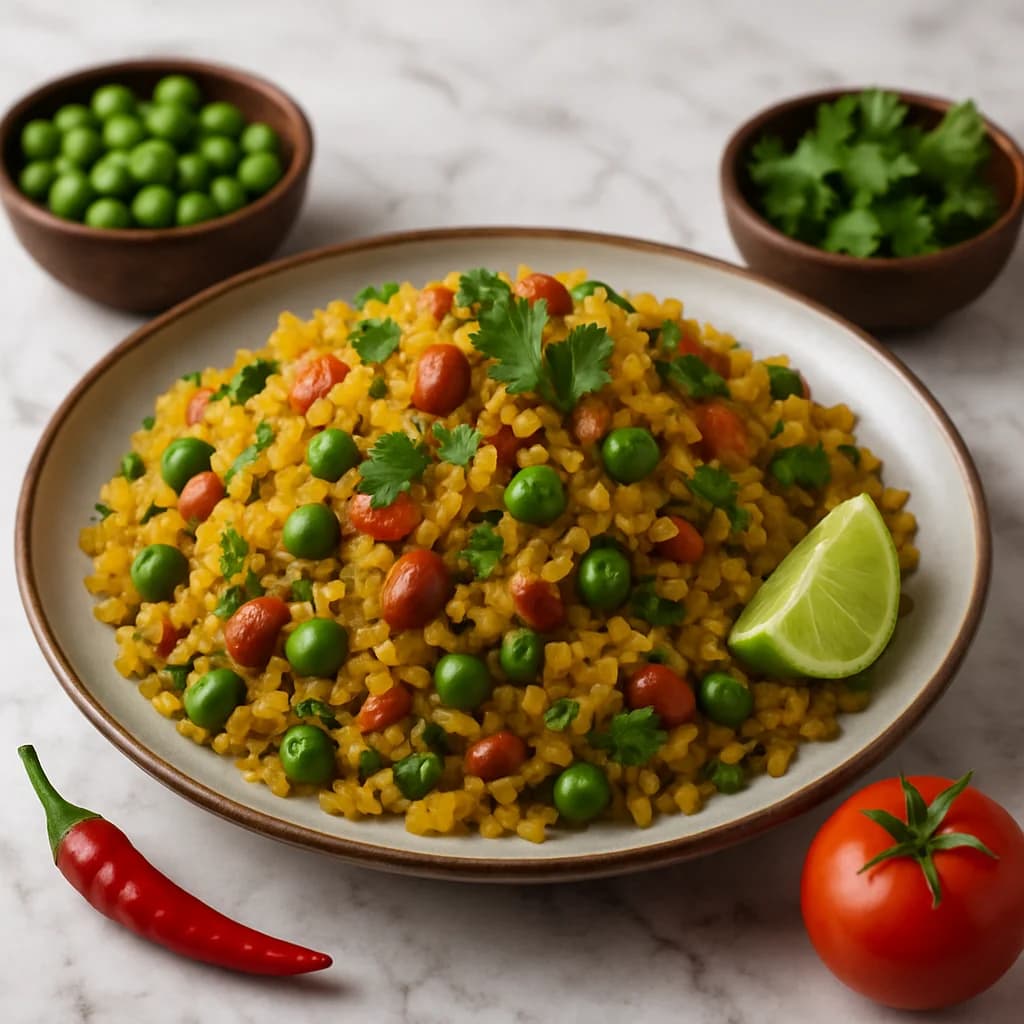
Flavorsome Punjabi Masala Poha is a hearty breakfast dish that combines fluffy flattened rice with a vibrant mix of spices and vegetables, creating a balanced and flavorful meal. Infused with traditional Indian spices like turmeric, cumin, and mustard seeds, this recipe is perfect for an active lifestyle and weight-loss goals. The addition of peas and peanuts provides texture and protein, while the tanginess of lemon juice brings everything together. Ideal for a united family, this dish is easy to prepare and delivers a delightful burst of flavors in every bite.
Ingredients
- 500 g Poha
- 100G Oleo
- 500 g Onion
- - Frozen Peas
- 500g Good Life Raw Peanuts 500 G
- medium Chilli Green Long
- 100 g Coriander Leaves
- 100 g Curry Leaves
- 100 g Jeera
- 250 ml Lemon Juice Concentrate
- 100 g Red Chili Powder
- 100 g Salt
- 500 g Tomato - Hybrid
- 20 g Turmeric Powder
- 100 g Yellow Mustard Seeds
Instructions
- 1. Rinse the flattened rice (poha) in a sieve under running water until soft but not mushy, and set aside to drain.
- 2. Heat vegetable oil in a large pan over medium heat. Add mustard seeds and cumin seeds, allowing them to crackle for 30 seconds.
- 3. Add curry leaves, green chili, and chopped onion to the pan. Sauté until the onion turns translucent, about 2-3 minutes.
- 4. Stir in the chopped tomato, green peas, turmeric powder, red chili powder, and salt. Cook for 2-3 minutes until the tomatoes soften and the spices are aromatic.
- 5. Add the drained poha to the pan and gently mix to coat the rice with the spice mixture. Cook for 2-3 minutes until heated through.
- 6. Mix in the roasted peanuts and lemon juice, ensuring even distribution. Cook for another minute.
- 7. Garnish with chopped coriander leaves and serve hot with a wedge of lemon for extra tang.
How to make Flavorsome Punjabi Masala Poha
- Rinse the poha. Rinse the flattened rice in a sieve under running water until soft but not mushy, then leave it to drain.
- Temper and sauté. Heat vegetable oil in a large pan over medium heat and let mustard and cumin seeds crackle for 30 seconds. Add curry leaves, green chilli and onion and sauté for about 2-3 minutes until translucent.
- Cook the masala and poha. Stir in tomato, green peas, turmeric, red chilli powder and salt for 2-3 minutes until soft. Add the drained poha, mix gently and cook for 2-3 minutes until heated through.
- Finish and serve. Mix in the roasted peanuts and lemon juice and cook for another minute. Garnish with chopped coriander and serve hot with a lemon wedge.
Frequently asked questions
- Why is it important to rinse the poha before cooking?
- Rinsing the poha under running water softens it while removing excess starch, ensuring it doesn’t clump or turn mushy during cooking. Be careful not to soak it for too long, as this can cause it to lose its texture and become soggy.
- What role do mustard seeds and cumin play in this dish?
- Mustard seeds and cumin are essential for tempering in Indian cuisine, adding a nutty, earthy aroma to the dish. Their crackling in hot oil releases their oils and enhances the overall flavor profile of the masala poha.
- How can I adjust the spice level in this Punjabi Masala Poha?
- To reduce the heat, you can use fewer green chilies or omit them entirely, and reduce the quantity of red chili powder. For a spicier version, add extra green chilies or sprinkle a pinch of chili flakes during the final mixing step.
- What is the best substitute for hybrid tomatoes in this recipe?
- If hybrid tomatoes are unavailable, you can use ripe Roma or vine-ripened tomatoes. These varieties provide a similar balance of sweetness and acidity, which is crucial for complementing the spices in the dish.
- How can I prevent the peanuts from turning soft or losing their crunch?
- To maintain the crunch of the peanuts, roast them separately until golden brown and add them only towards the end of the cooking process. Avoid overcooking them in the pan with the poha, as prolonged exposure to heat can make them soggy.